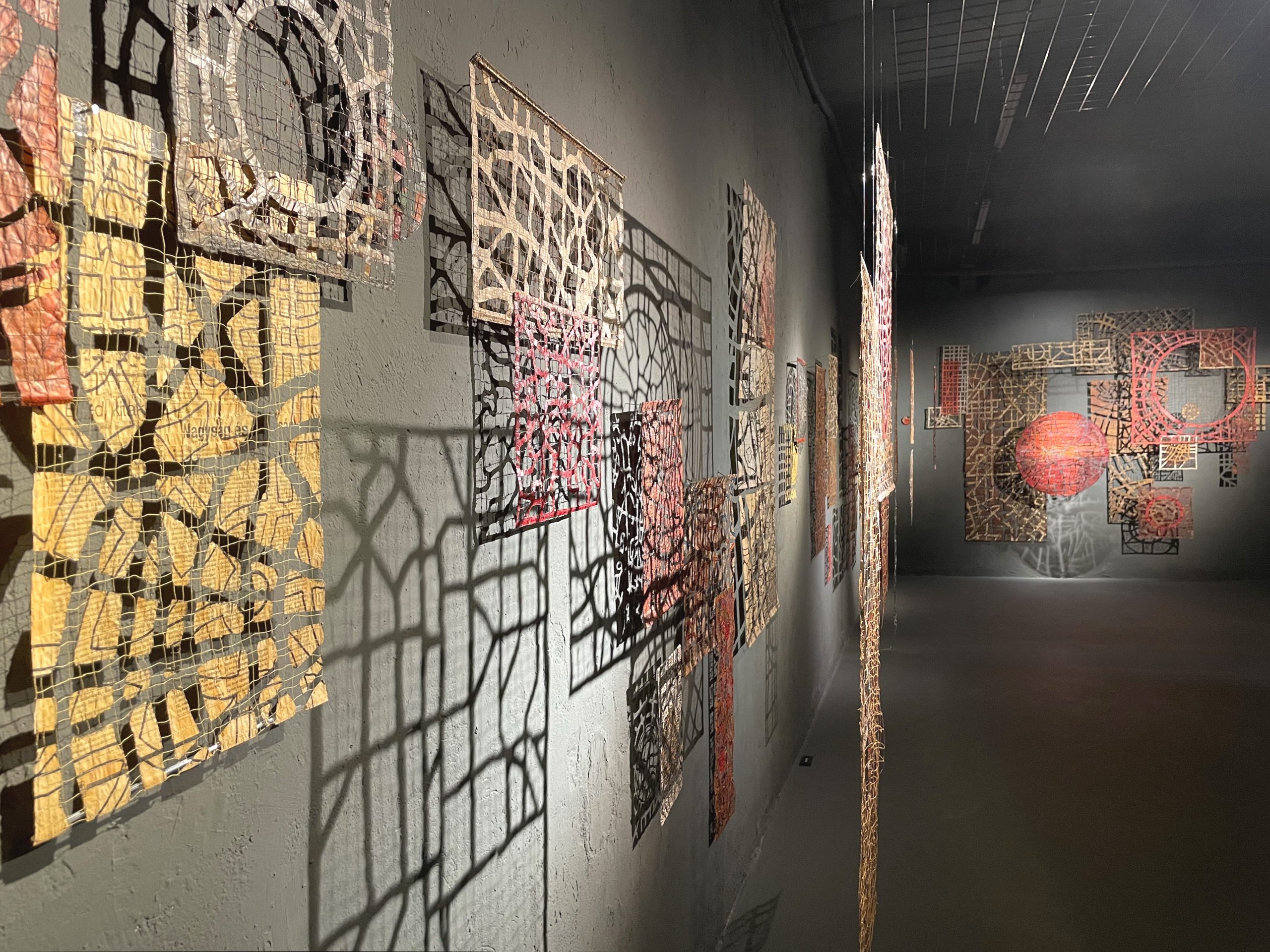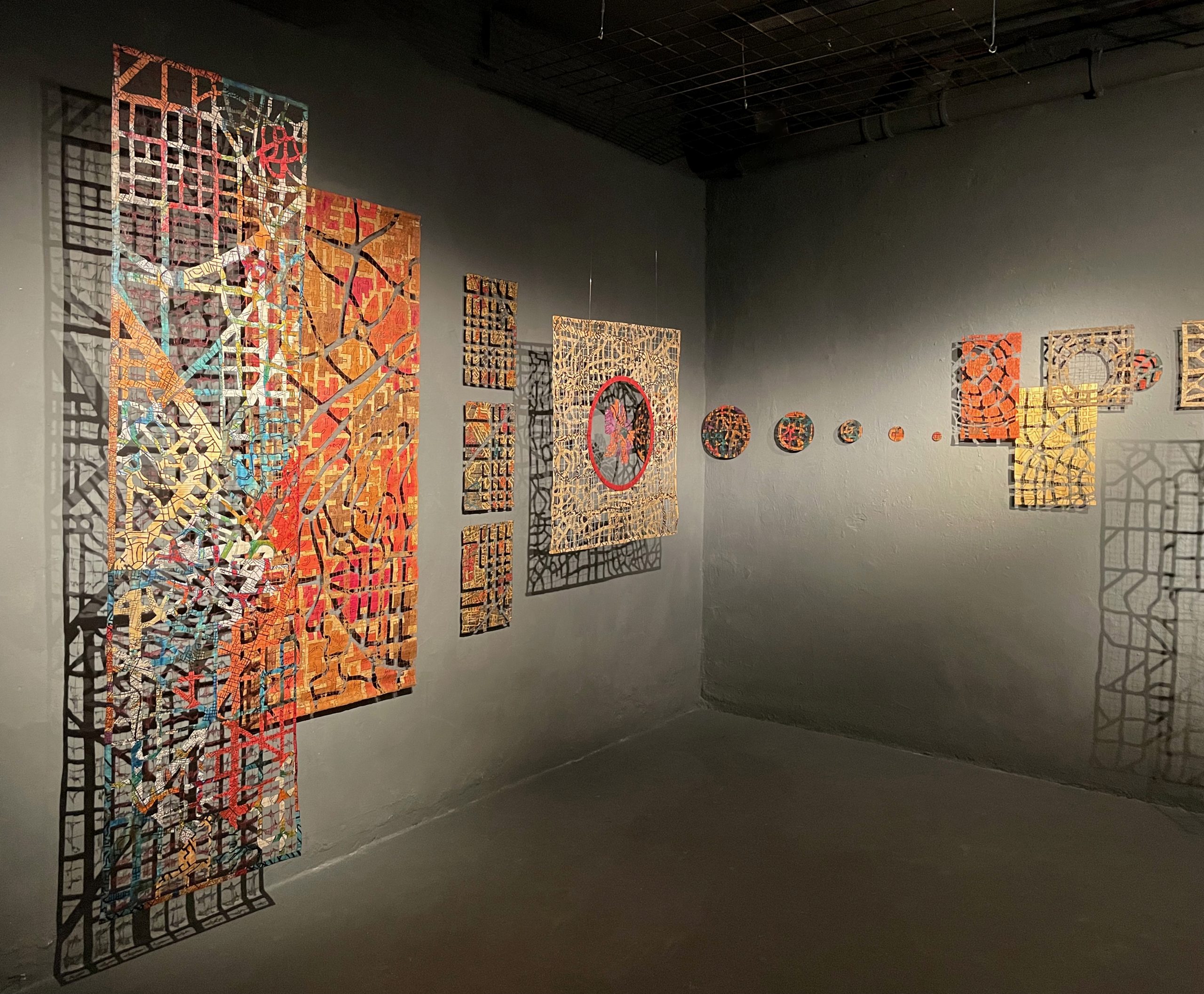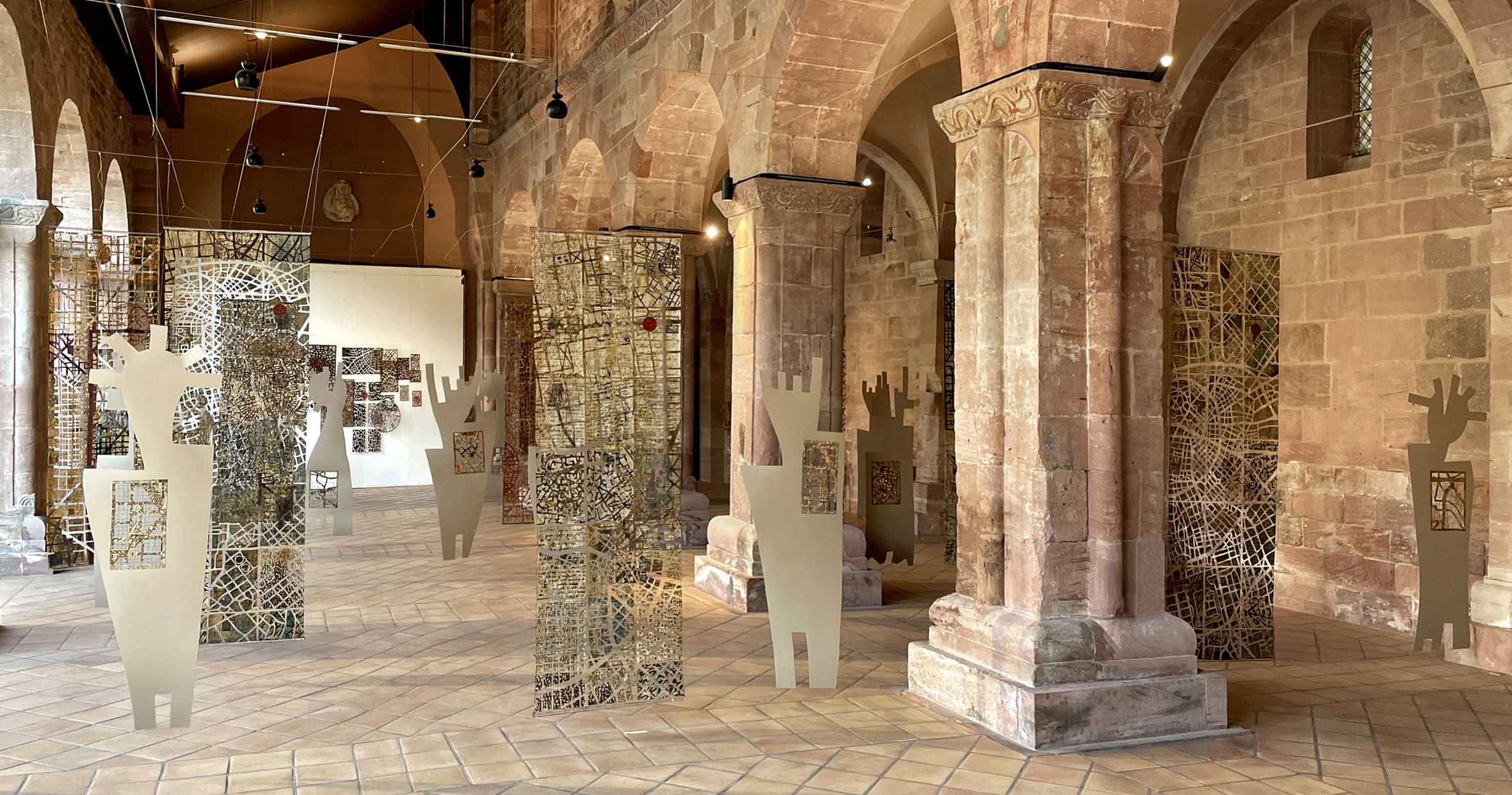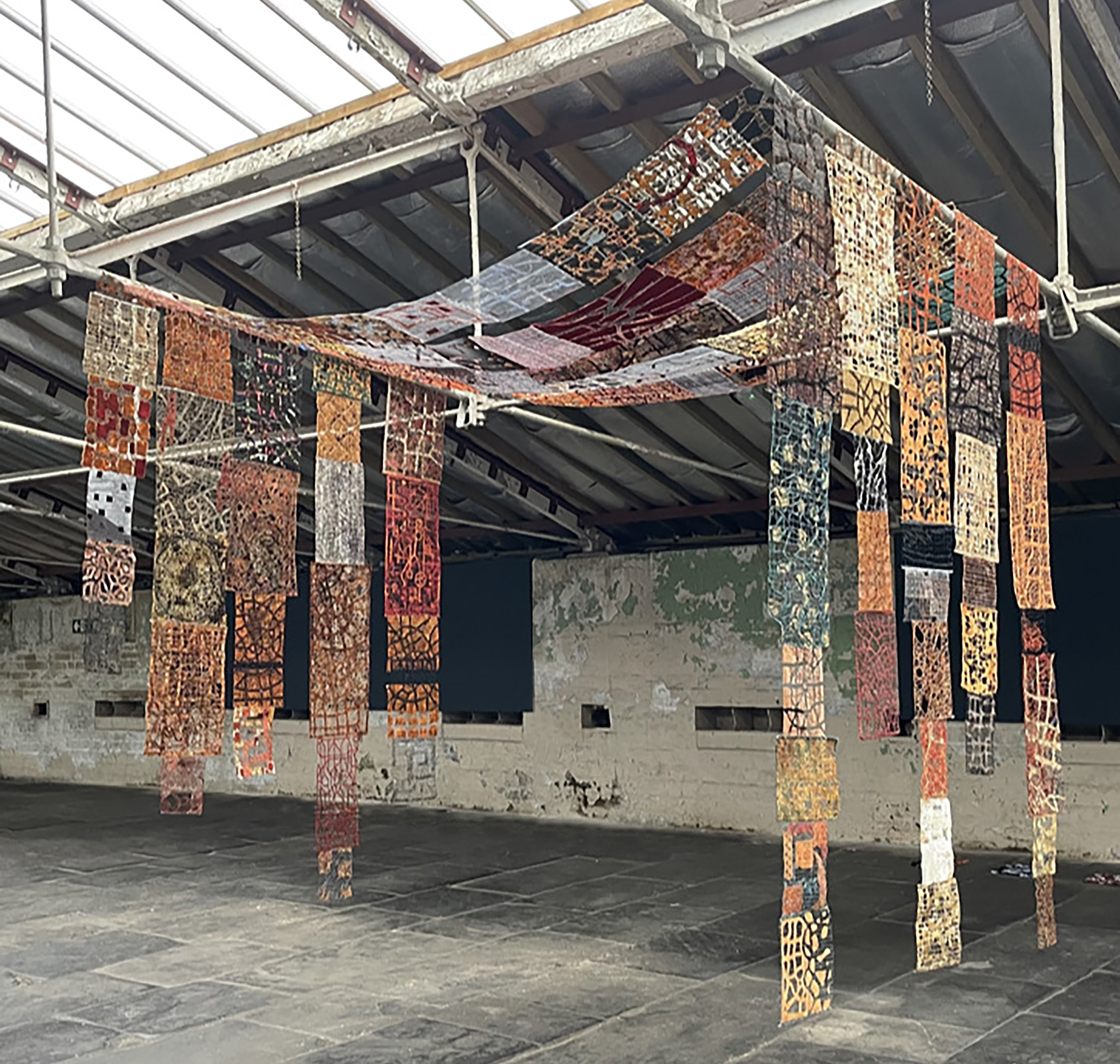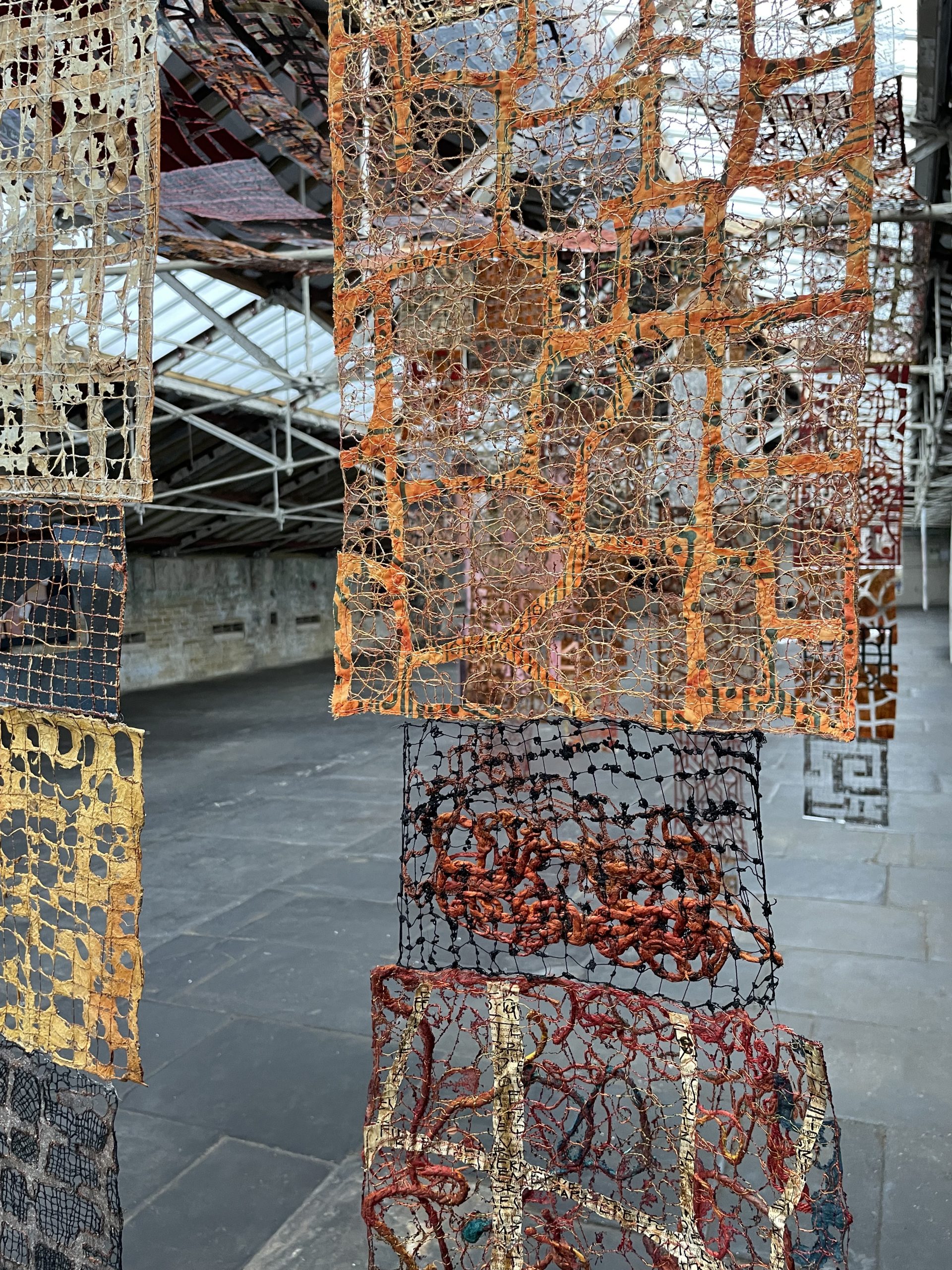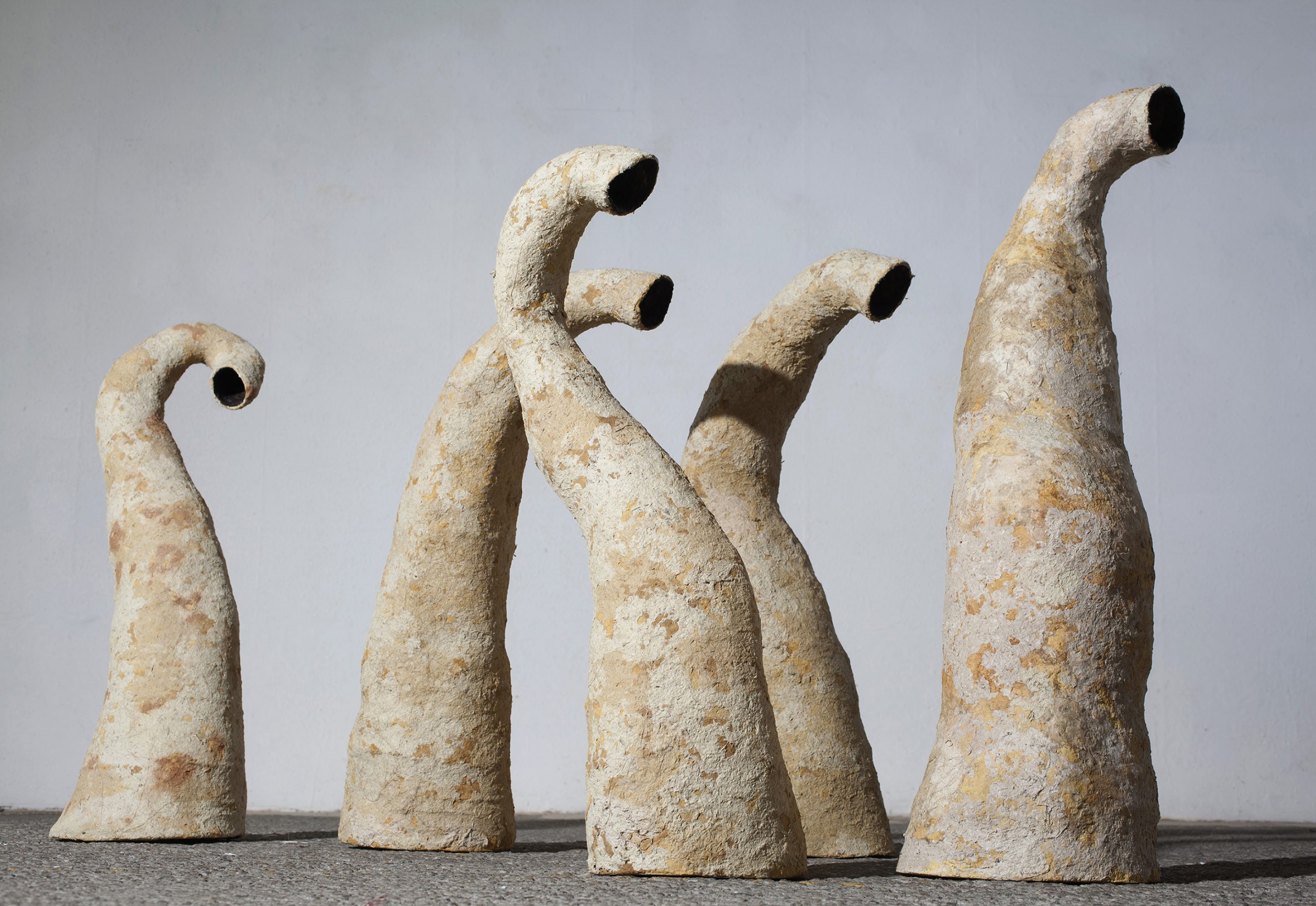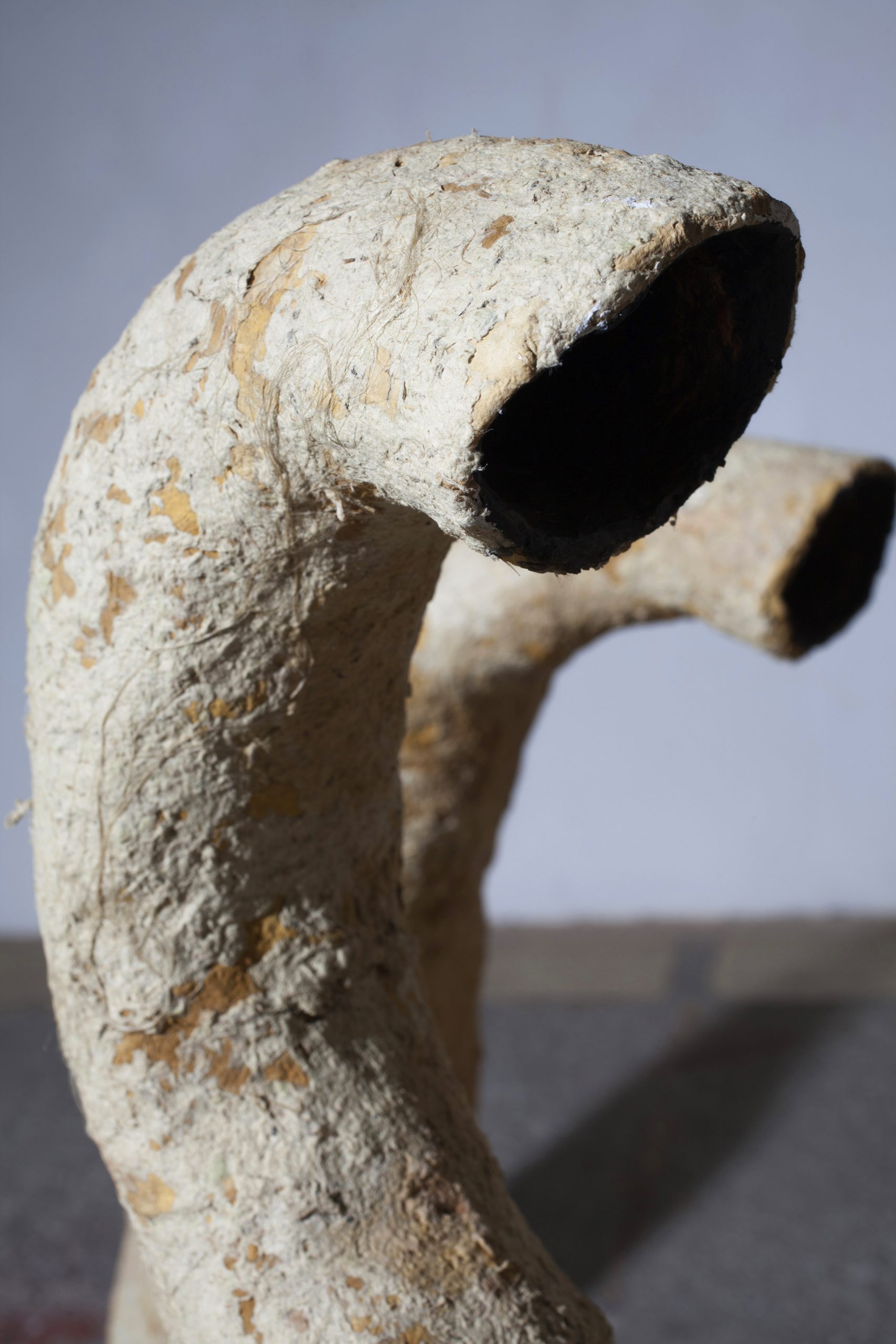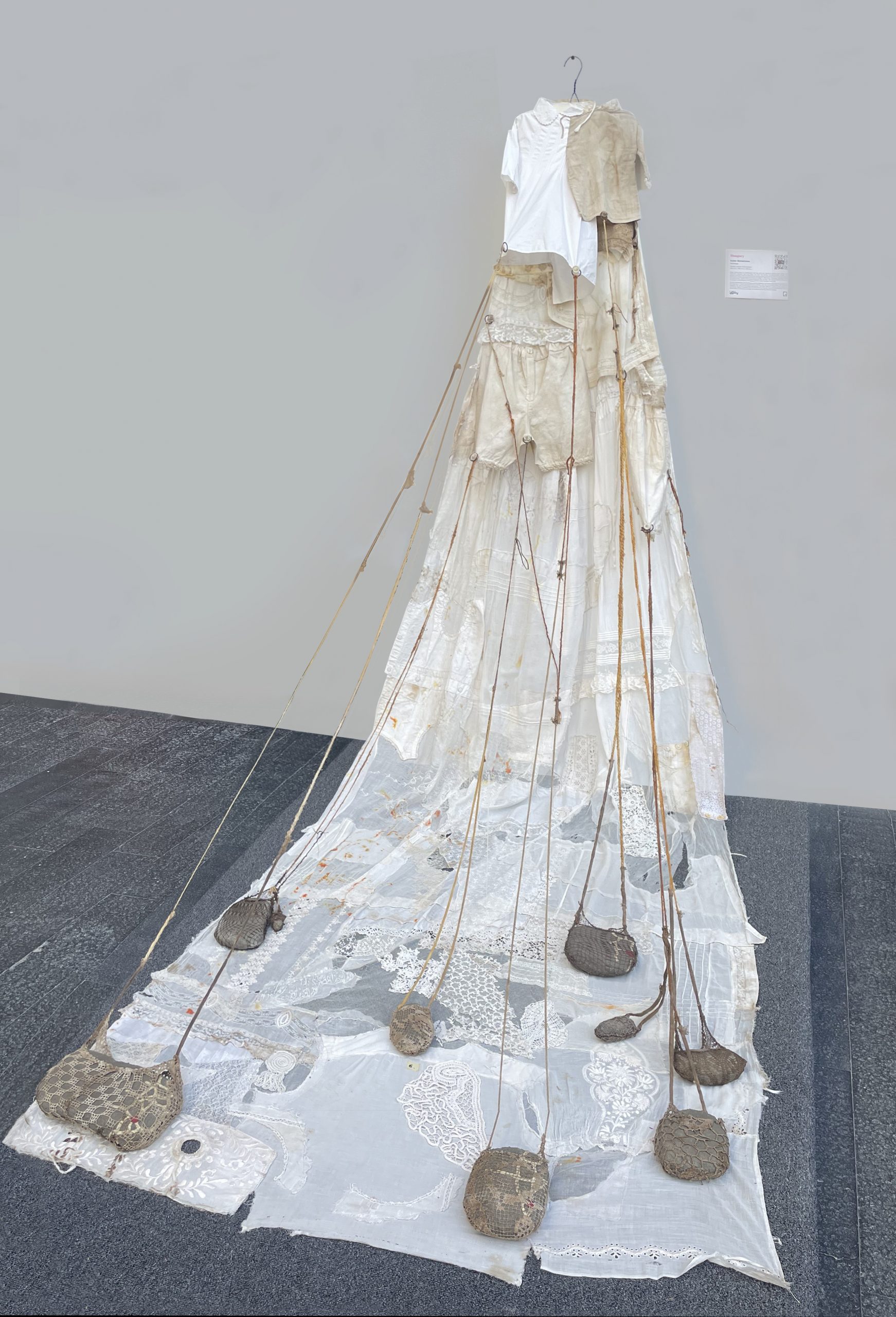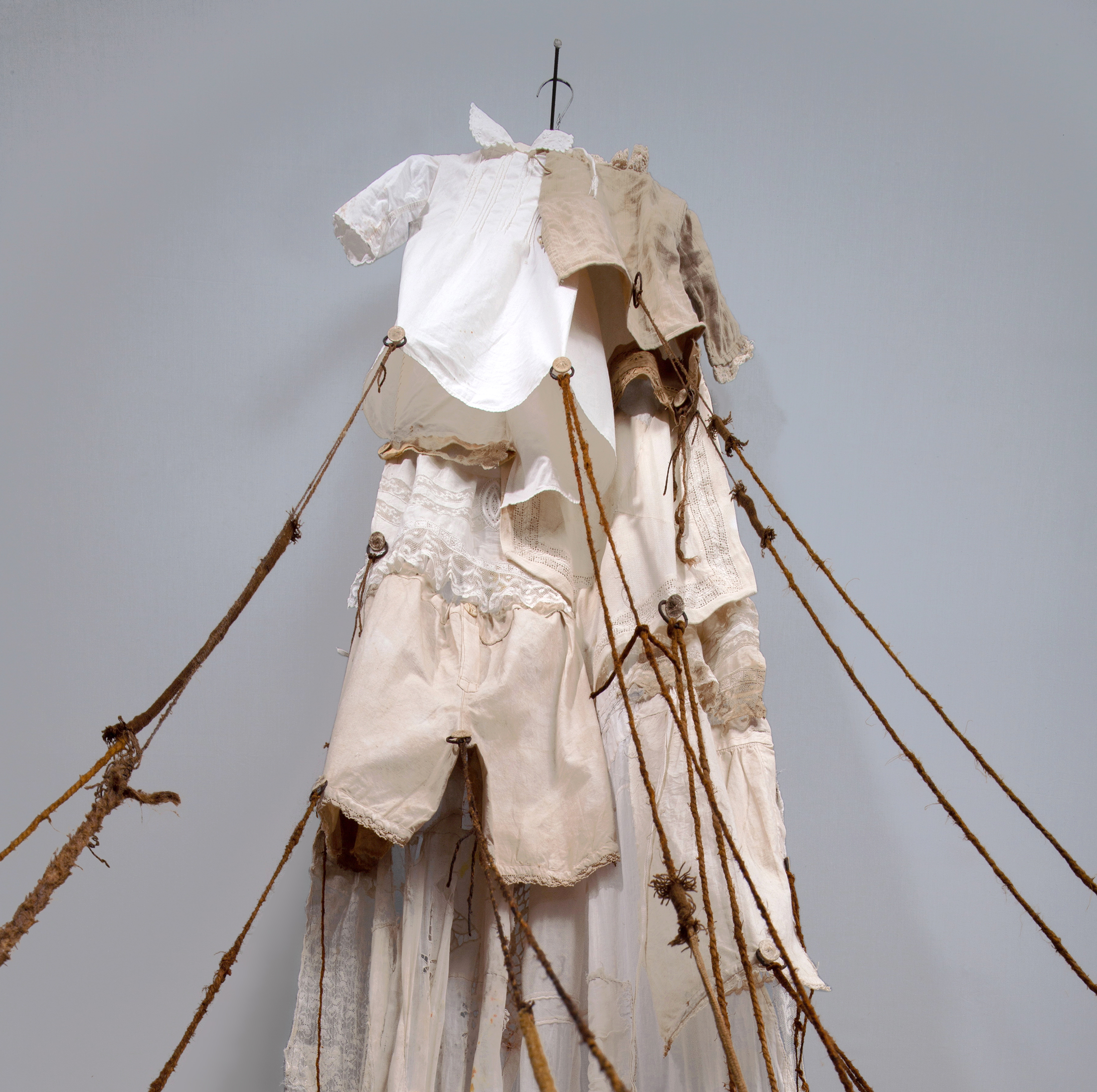
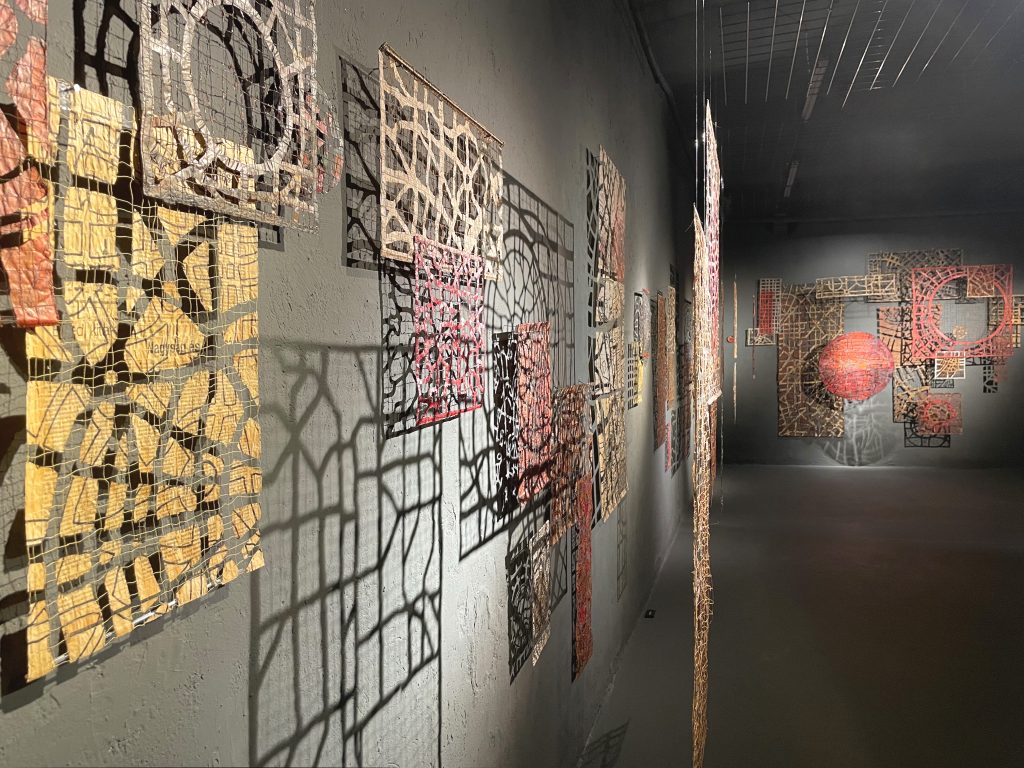
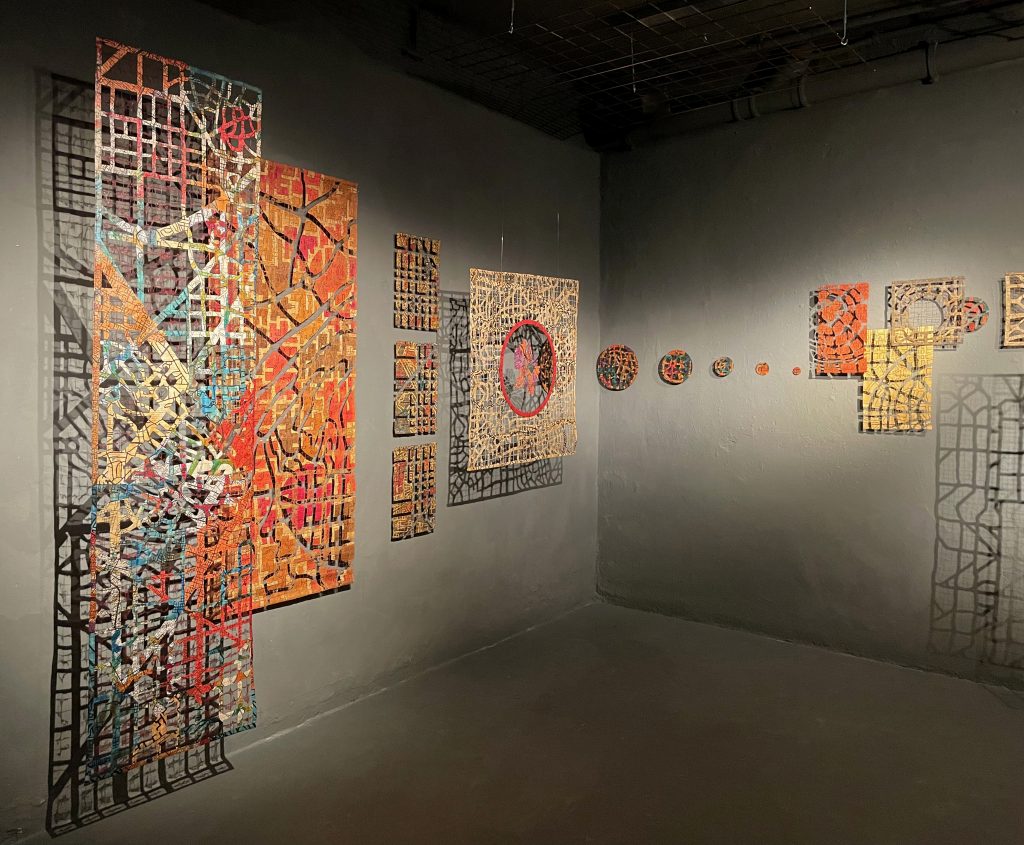
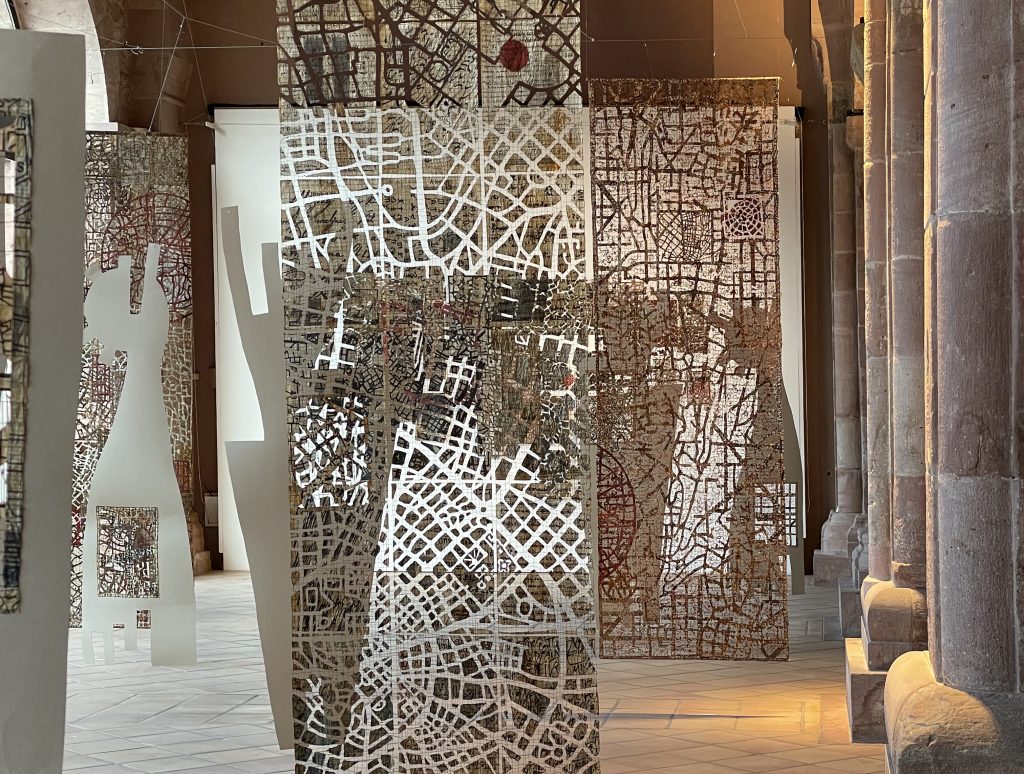
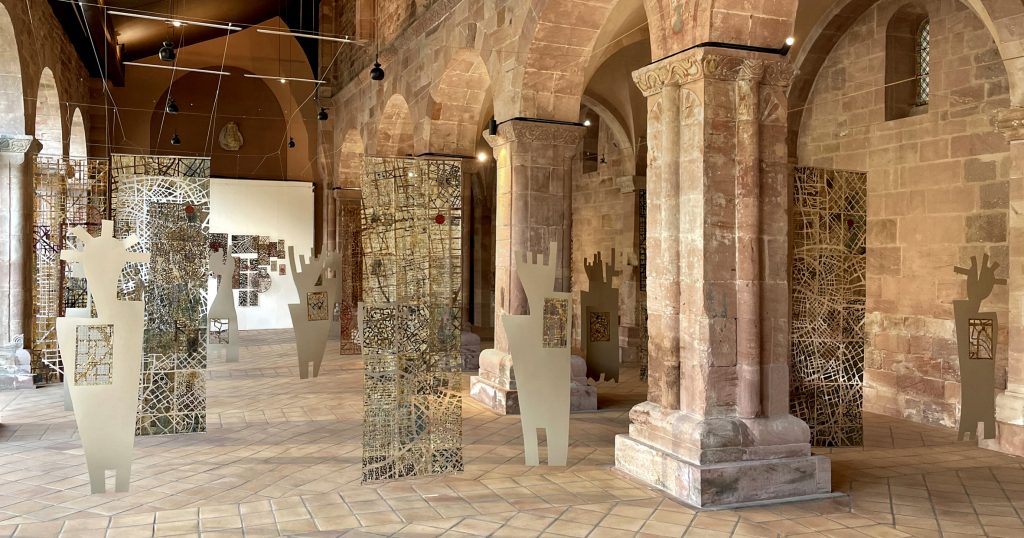
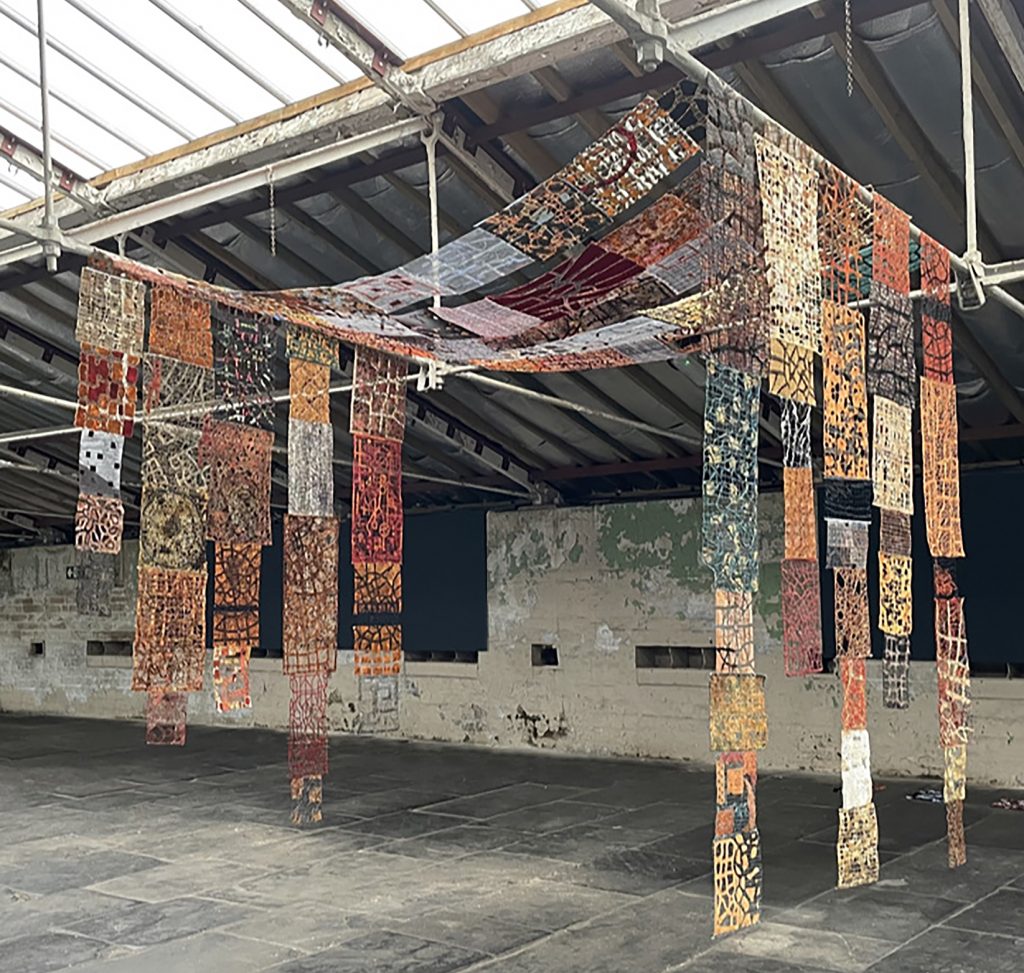
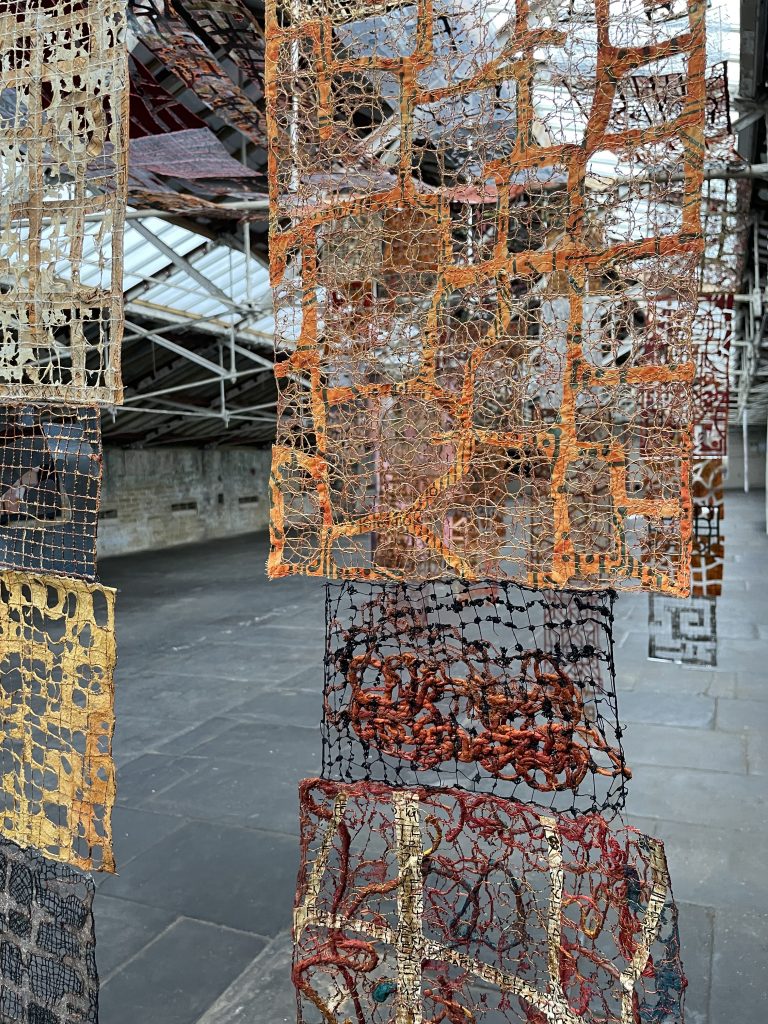
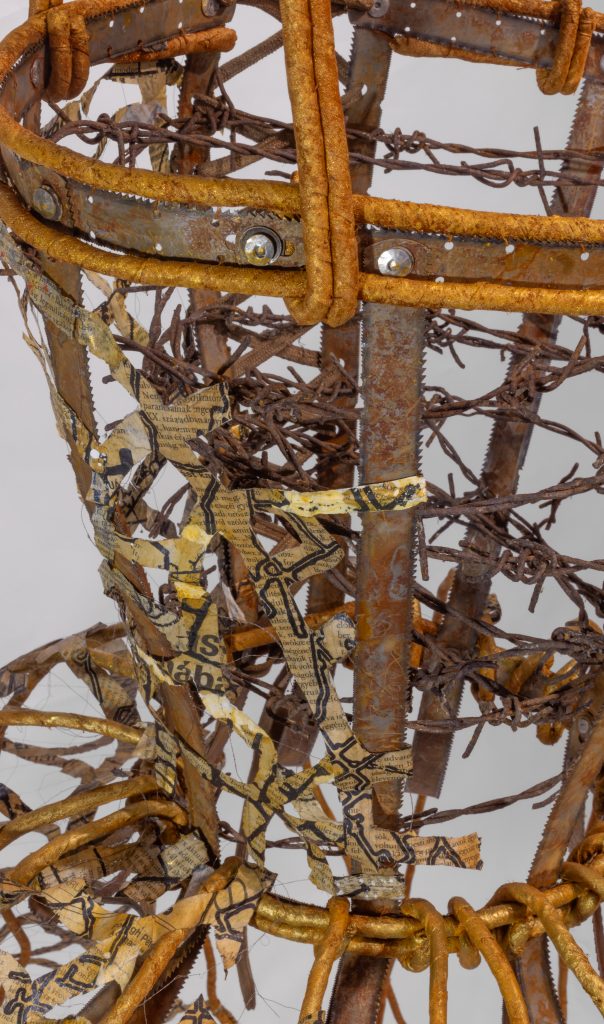
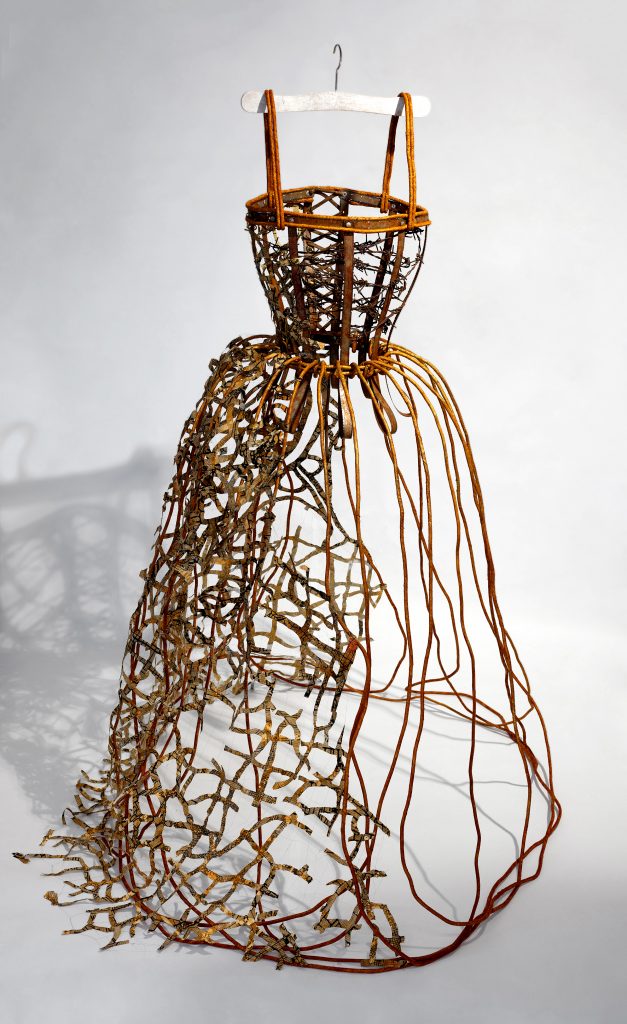
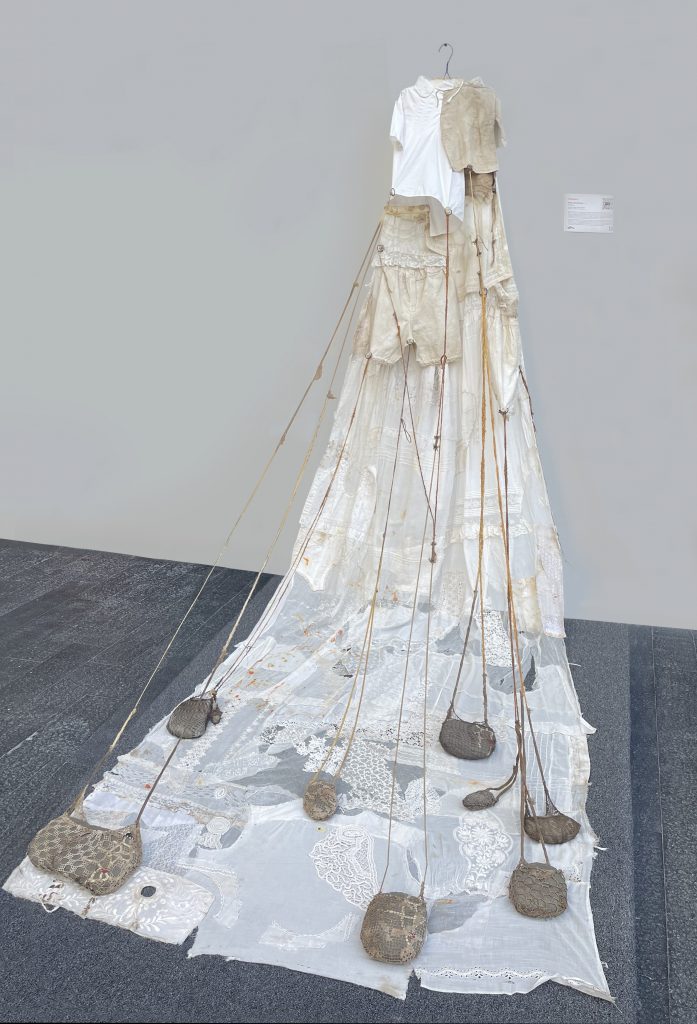
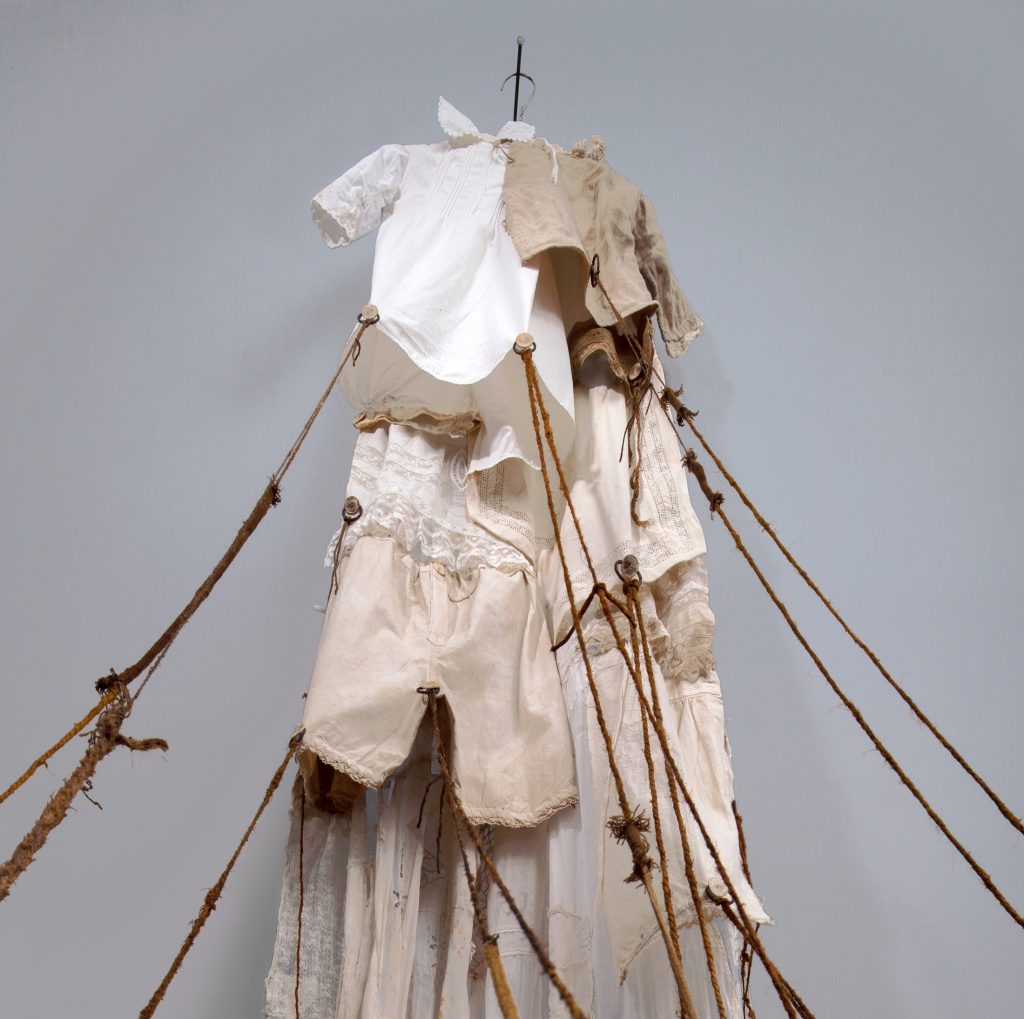
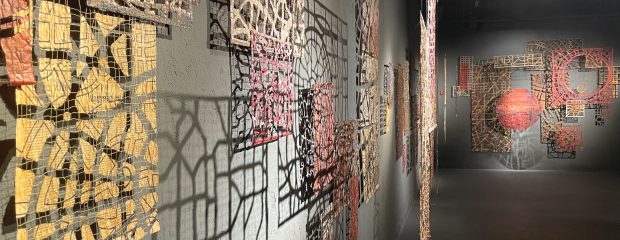
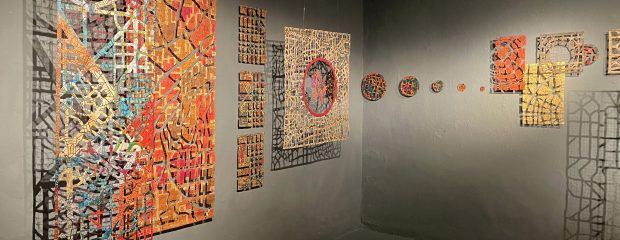
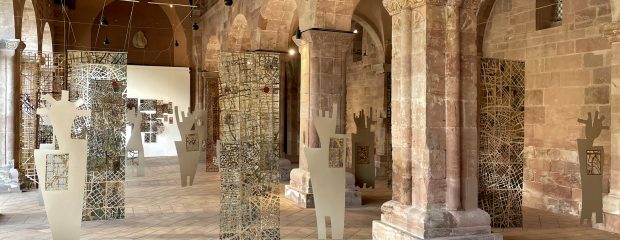
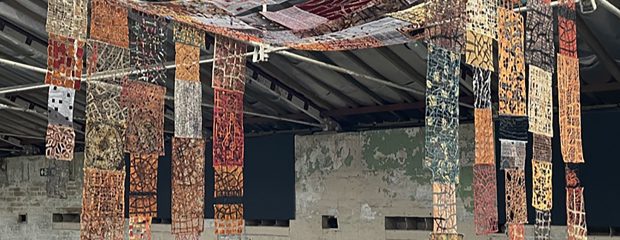
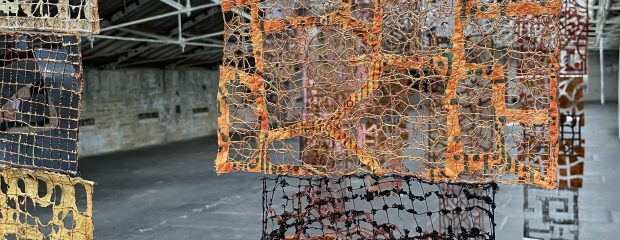
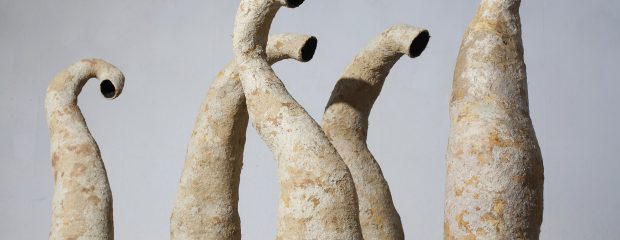
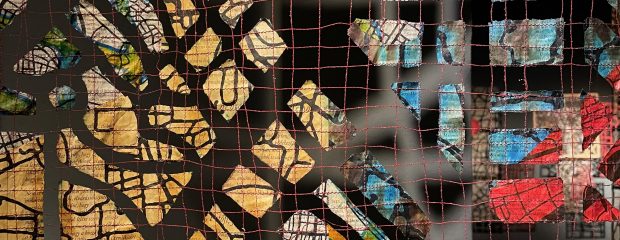
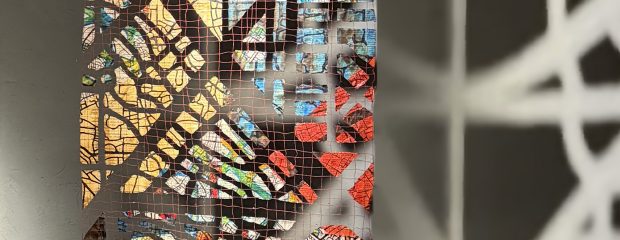
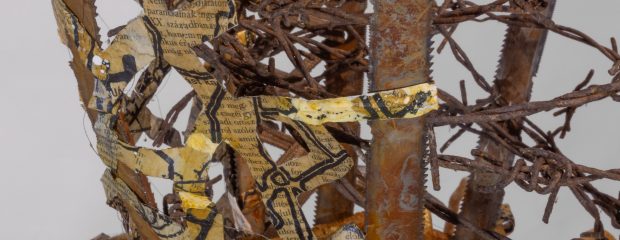
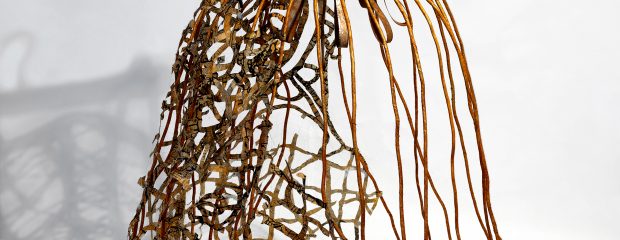
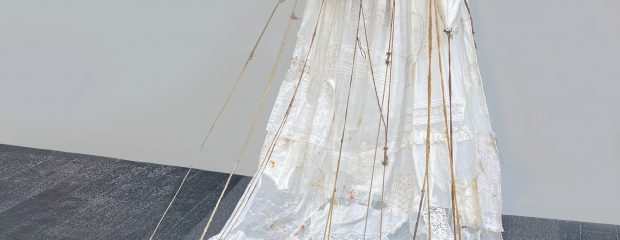
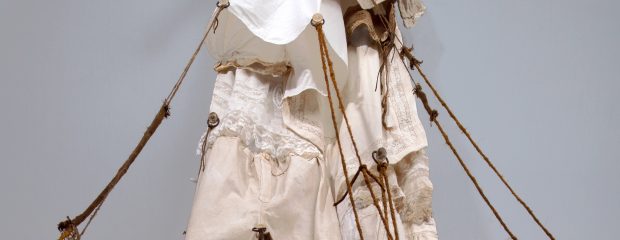
Eszter Bornemisza is a Budapest-based fibre artist who transforms recycled paper, textiles, and other discarded soft materials into richly layered works. Her practice combines traditional textile techniques with experimental approaches to paper pulp making and casting, integrating printing, painting, cutting, and machine stitching. The result is an evolving body of large-scale installations, wall hangings, and three-dimensional objects that invite close inspection of their intricate details.
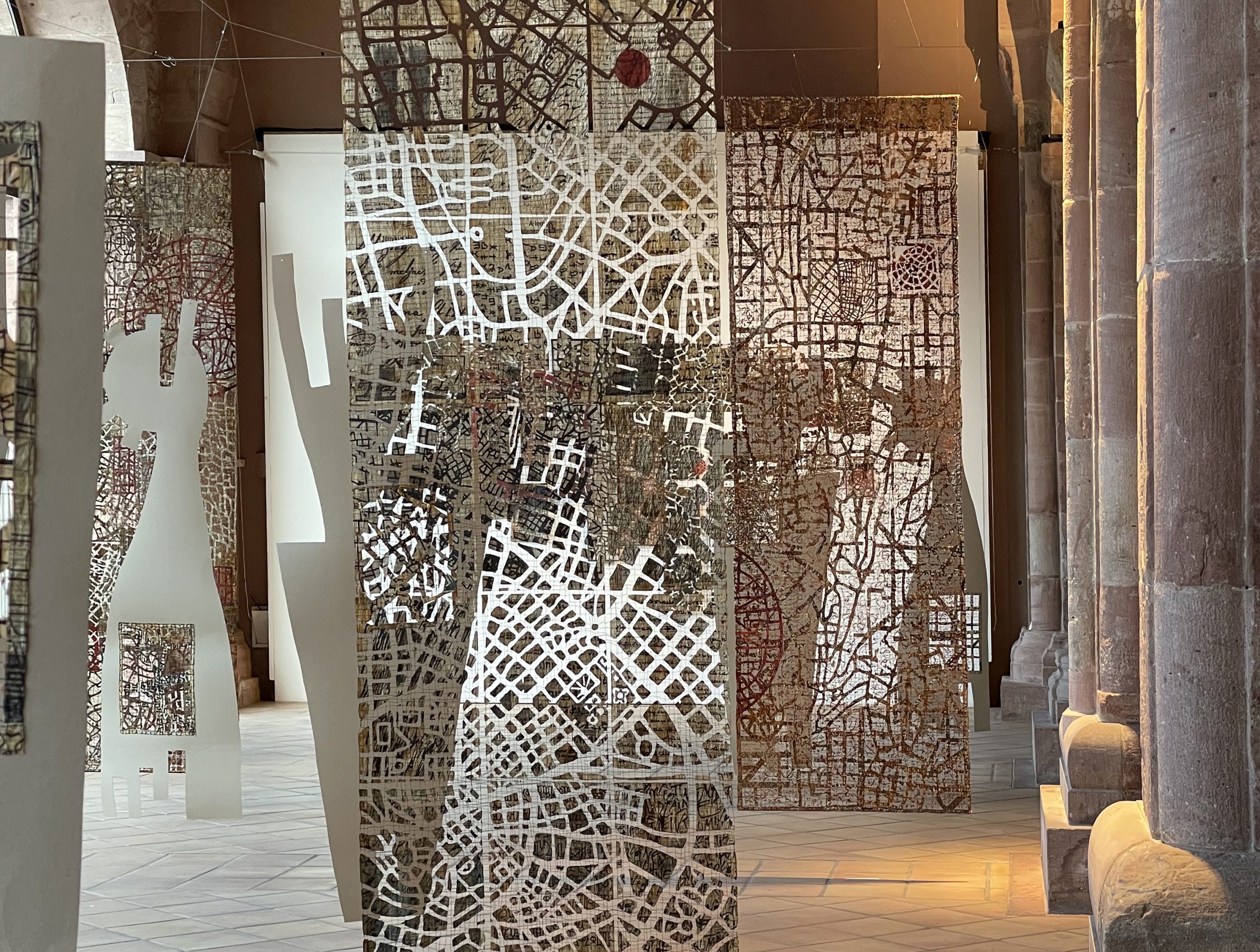
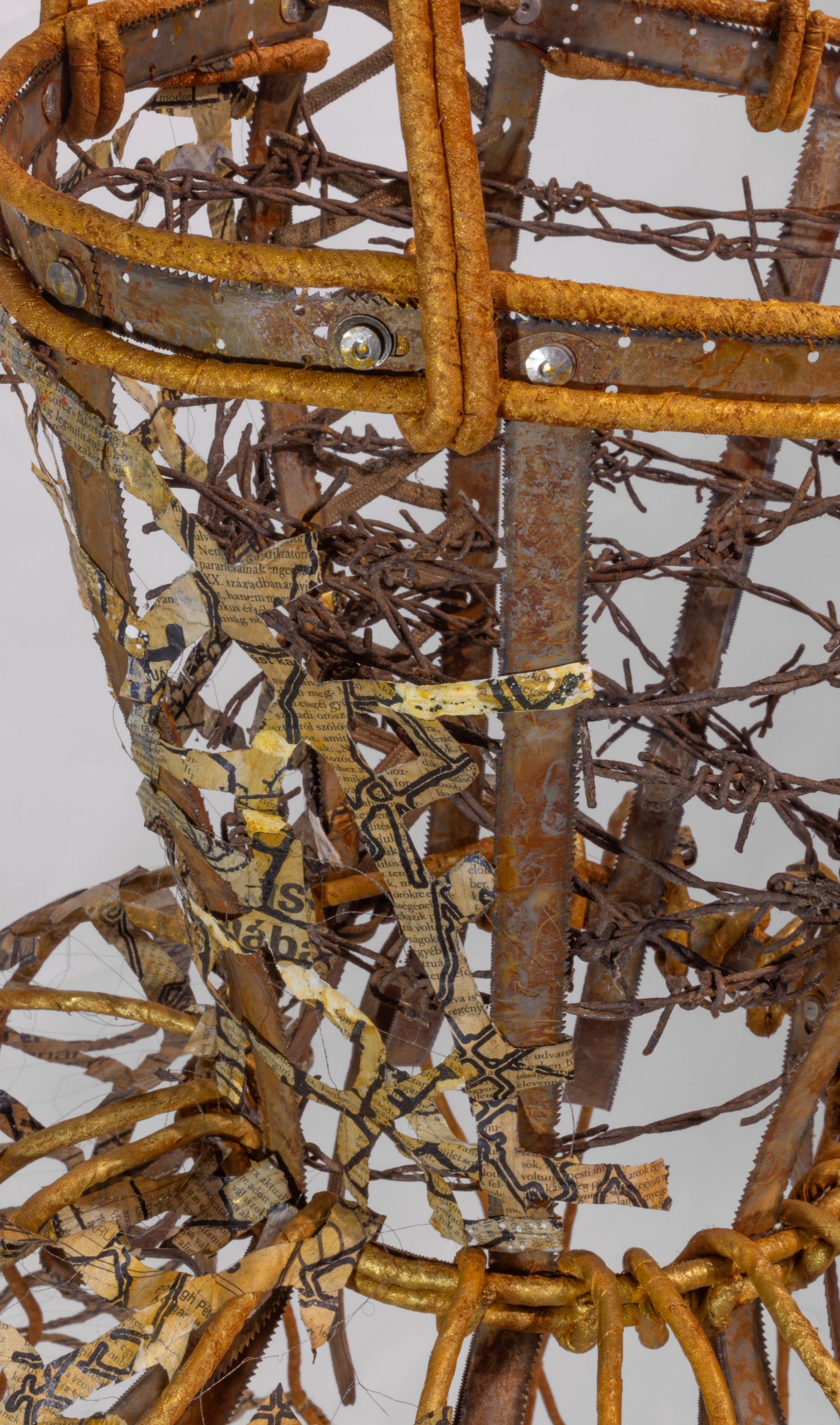
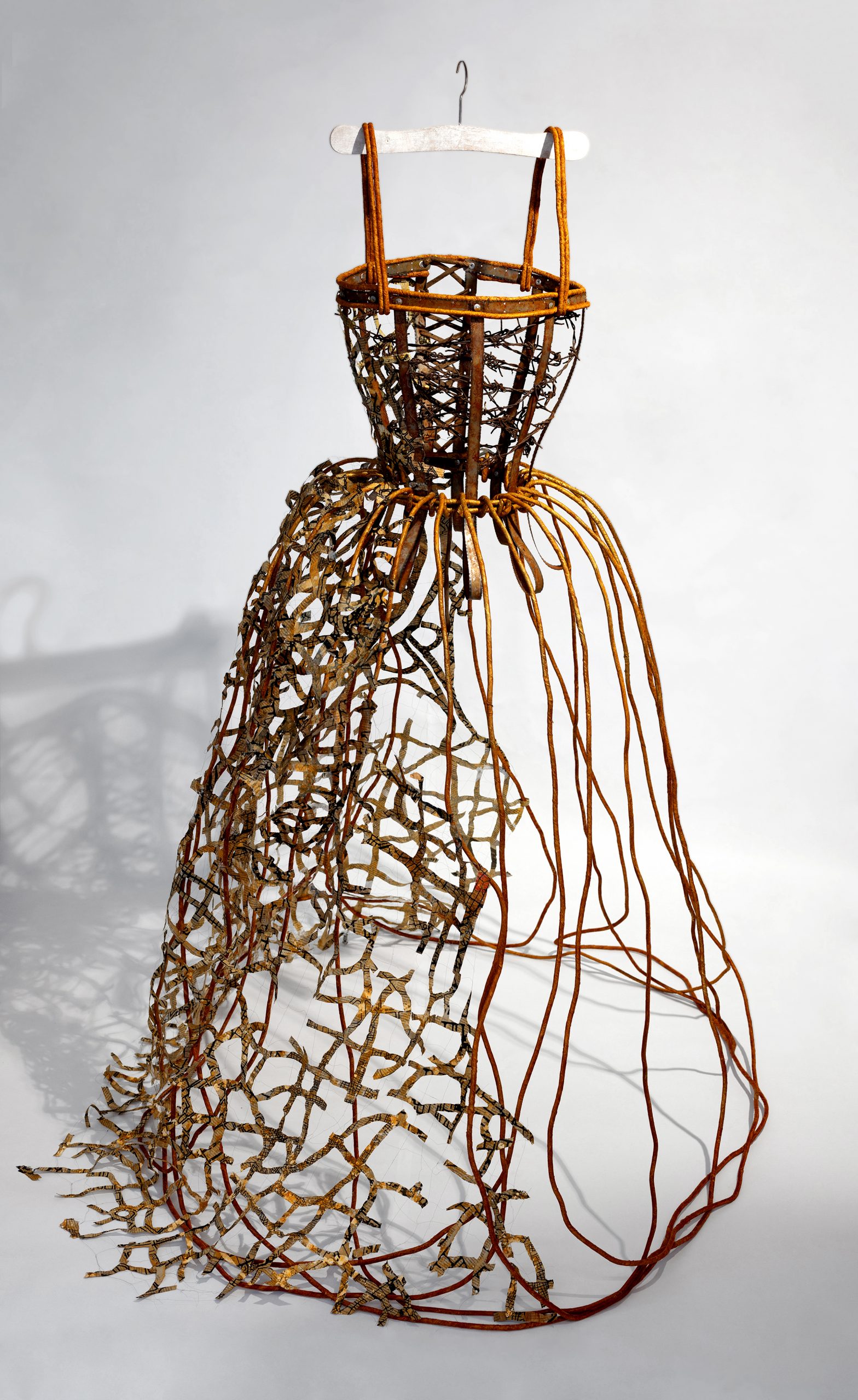
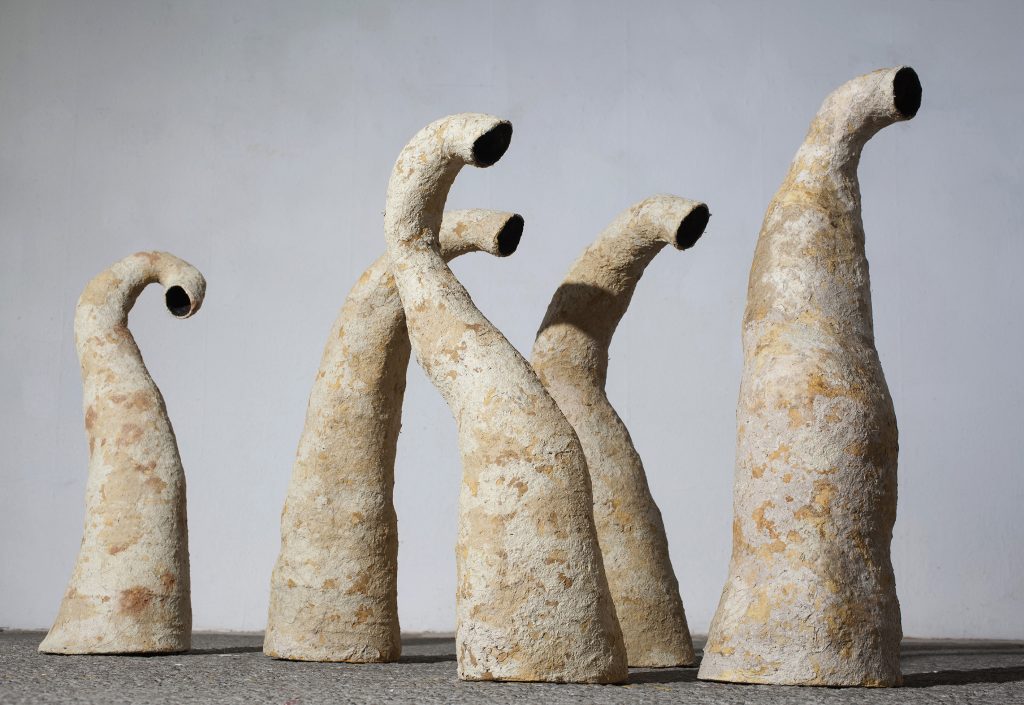
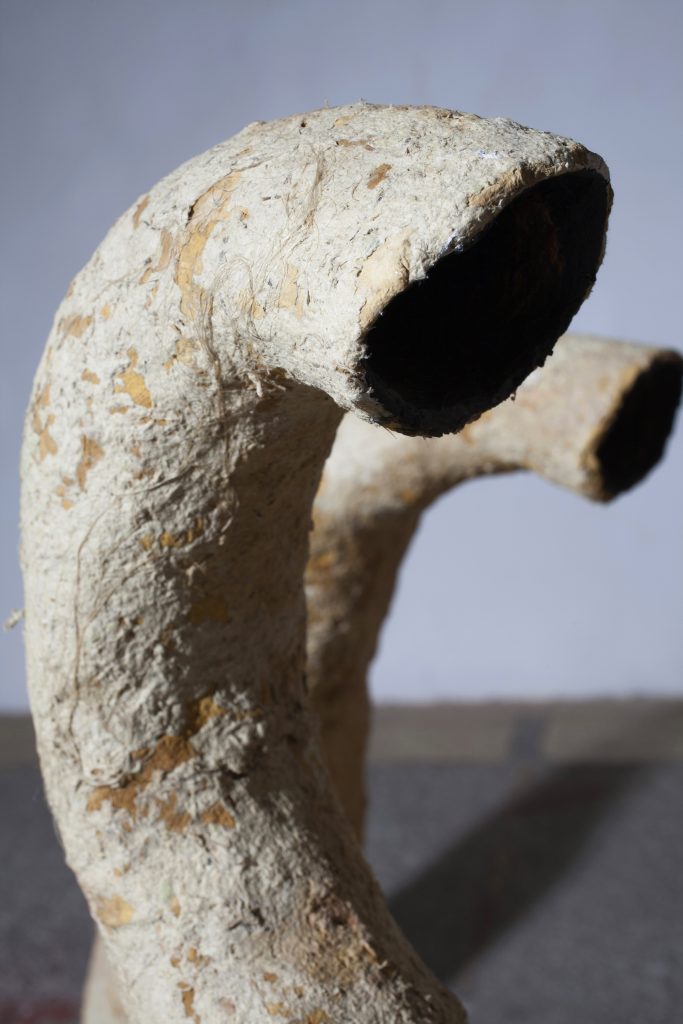
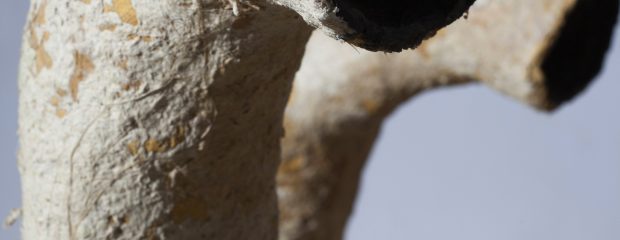
Originally trained as a mathematician, Bornemisza entered the art world in the mid-1990s as a self-taught maker of art quilts. Her curiosity soon led her to experiment with the fusion of paper and cloth, a pursuit that has since expanded into the creation of translucent, airy hangings made from newspaper and thread. For her object installations, she cooks her own paper pulp from rush and sedge, casting it over a variety of armatures.
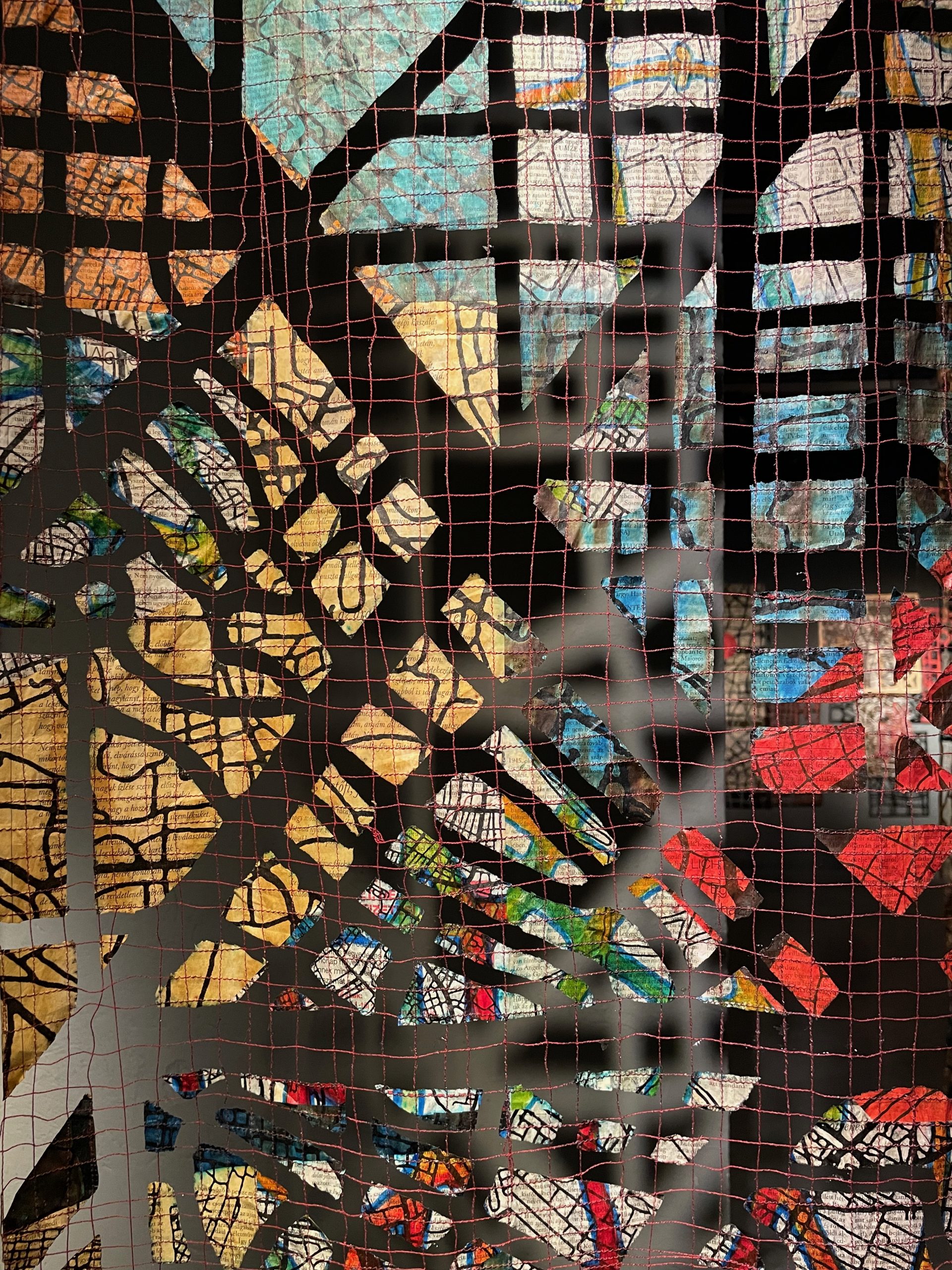
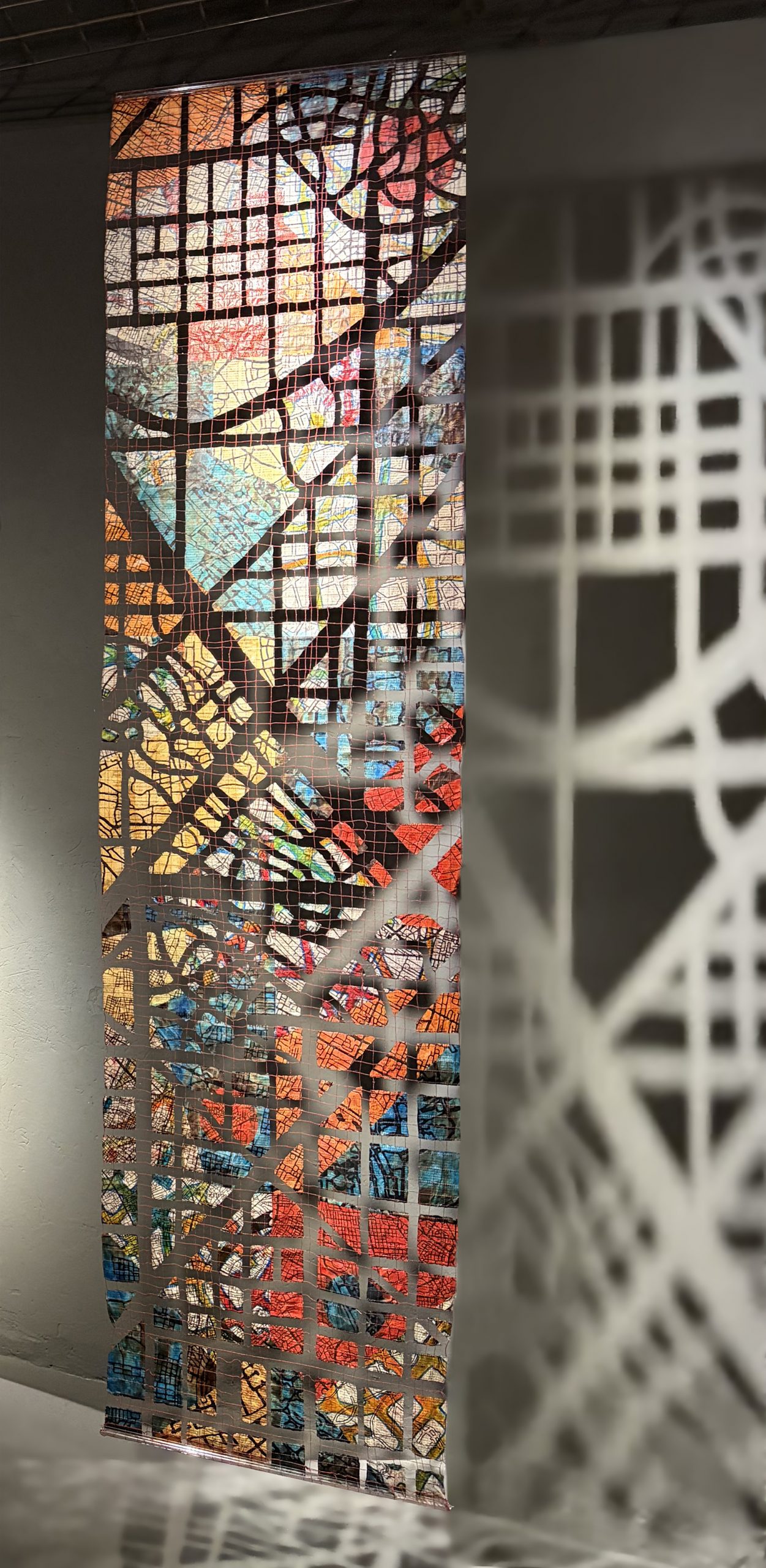
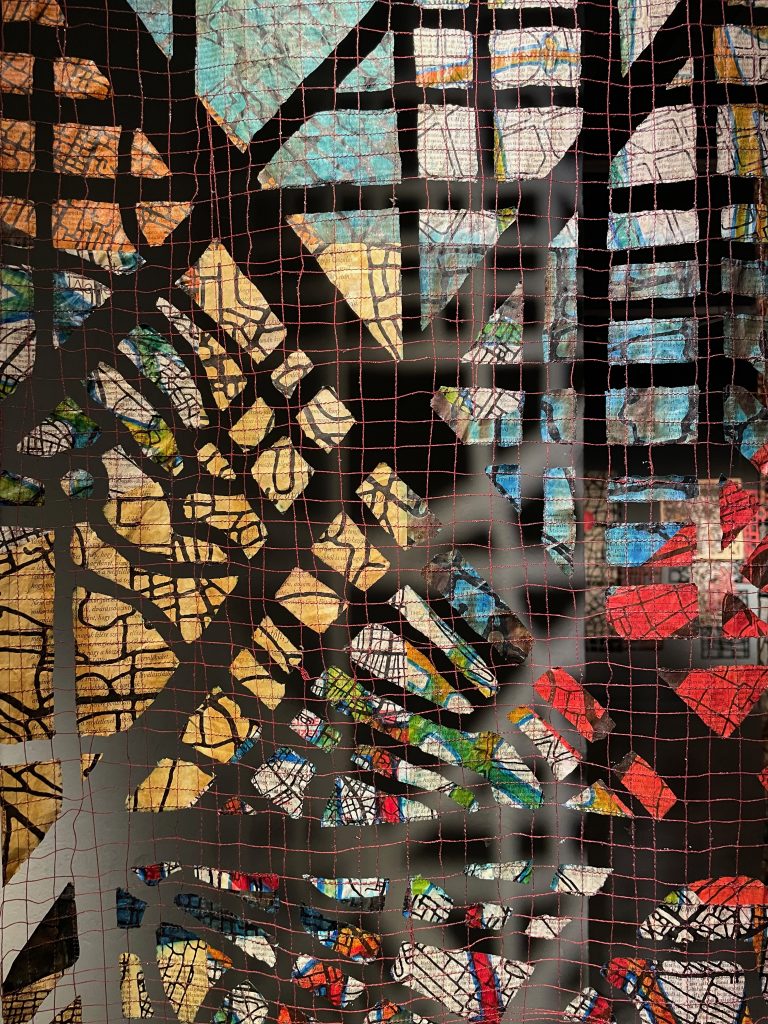
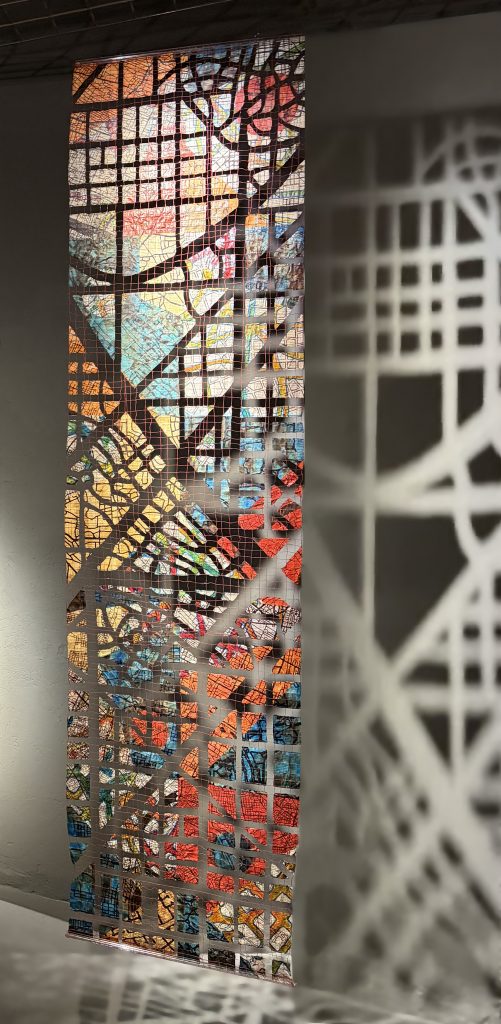
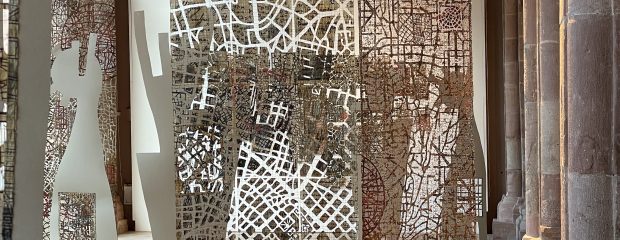
Over the years, she has explored the complexities of urban existence through the lens of cartography—distorting, layering, and reimagining city maps into transparent, multilayered surfaces where light and shadow become active elements of the composition. Drawing on real and imaginary maps, she reflects on our relationship to the spaces we inhabit and seeks to capture moments of locating ourselves not only physically, but socially and mentally as well. As experimentation and research have been her primary tools for developing ideas, labyrinth-like maps with numerous dead-end streets have become visual metaphors for a journey toward finding her own identity within the art world.
Her work has been exhibited internationally in juried and solo exhibitions, recognized with awards, and featured in numerous art books, journals, museums, and private collections.