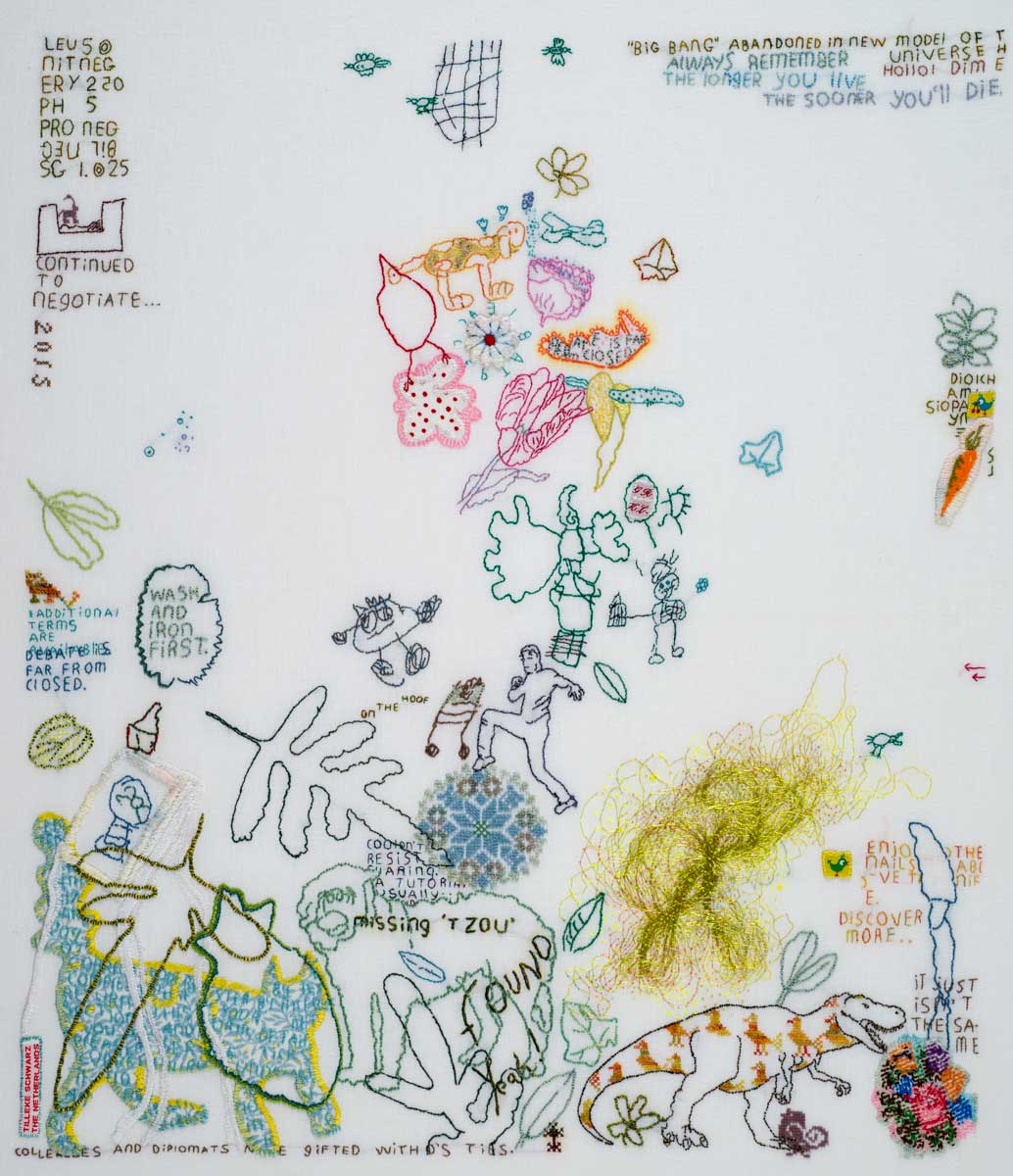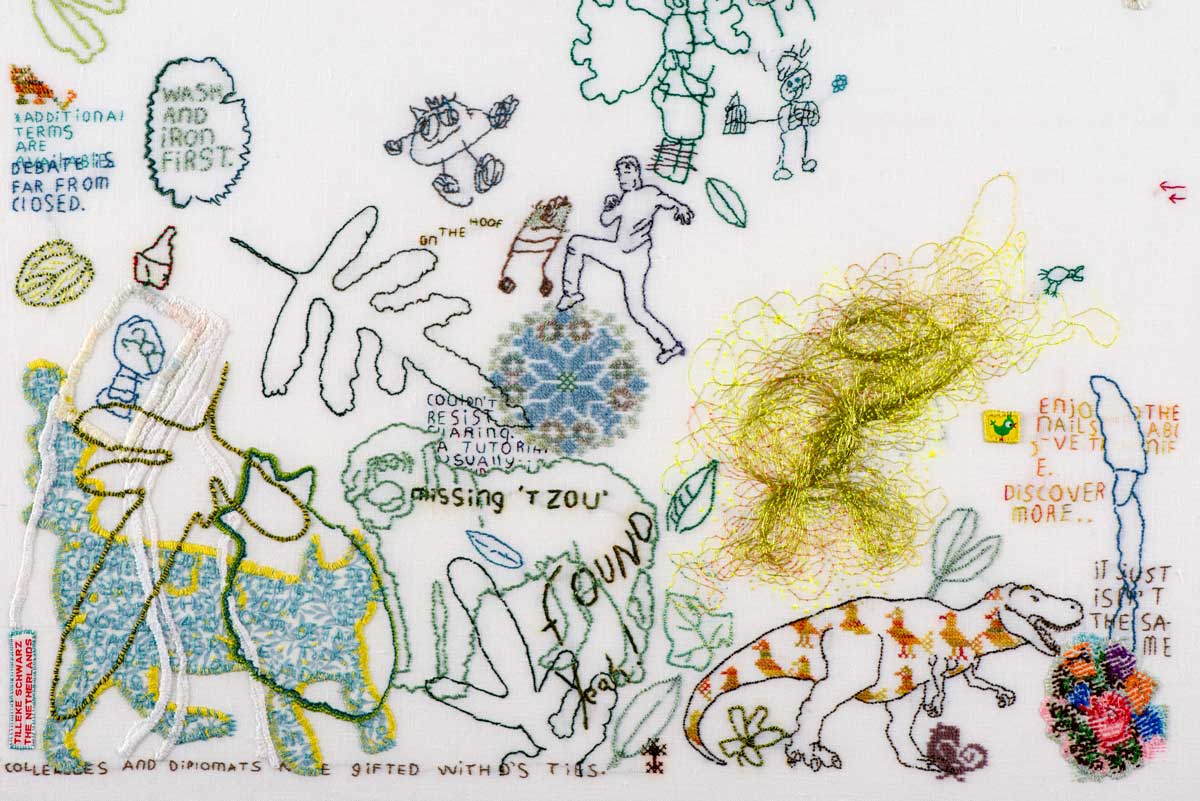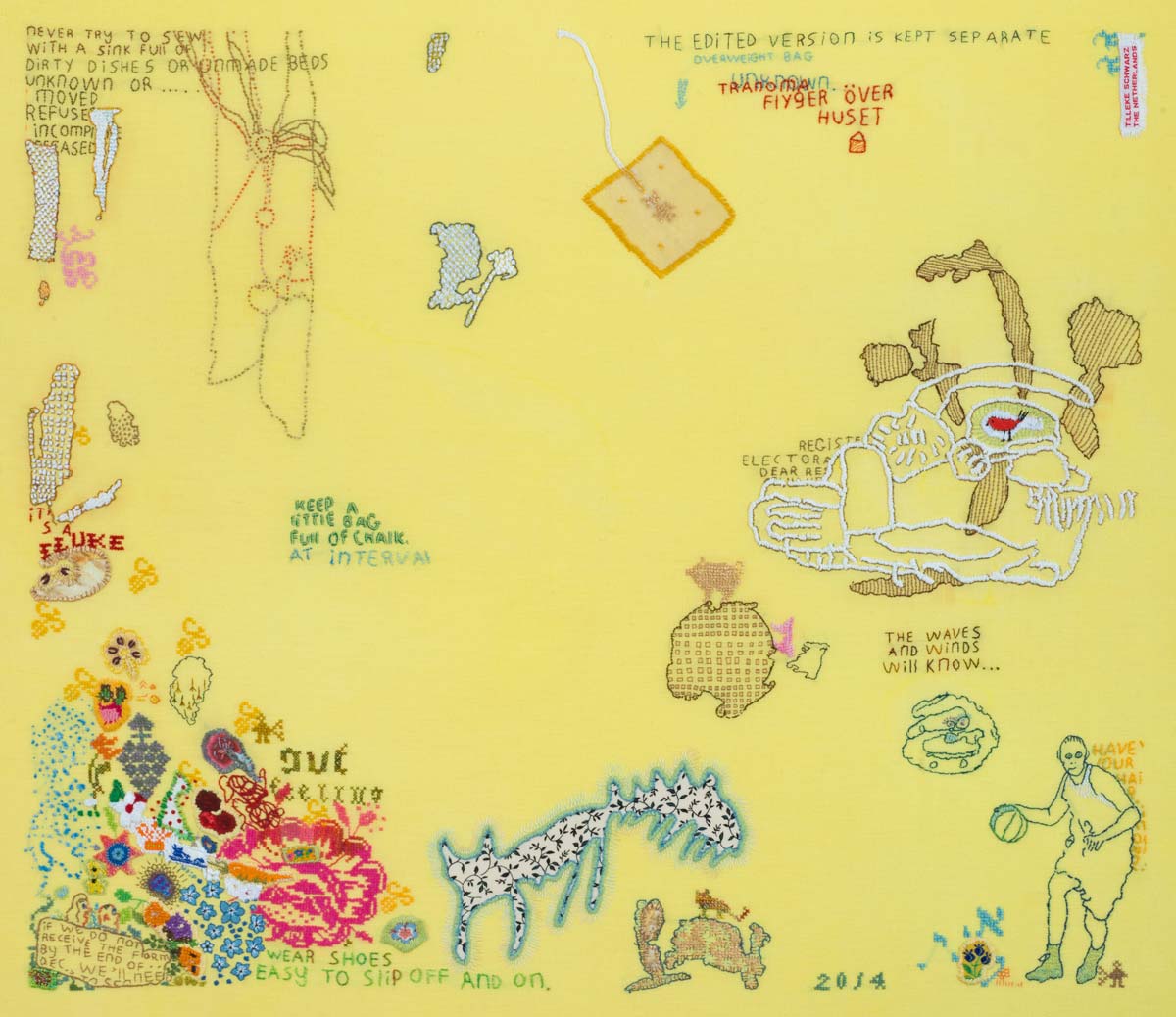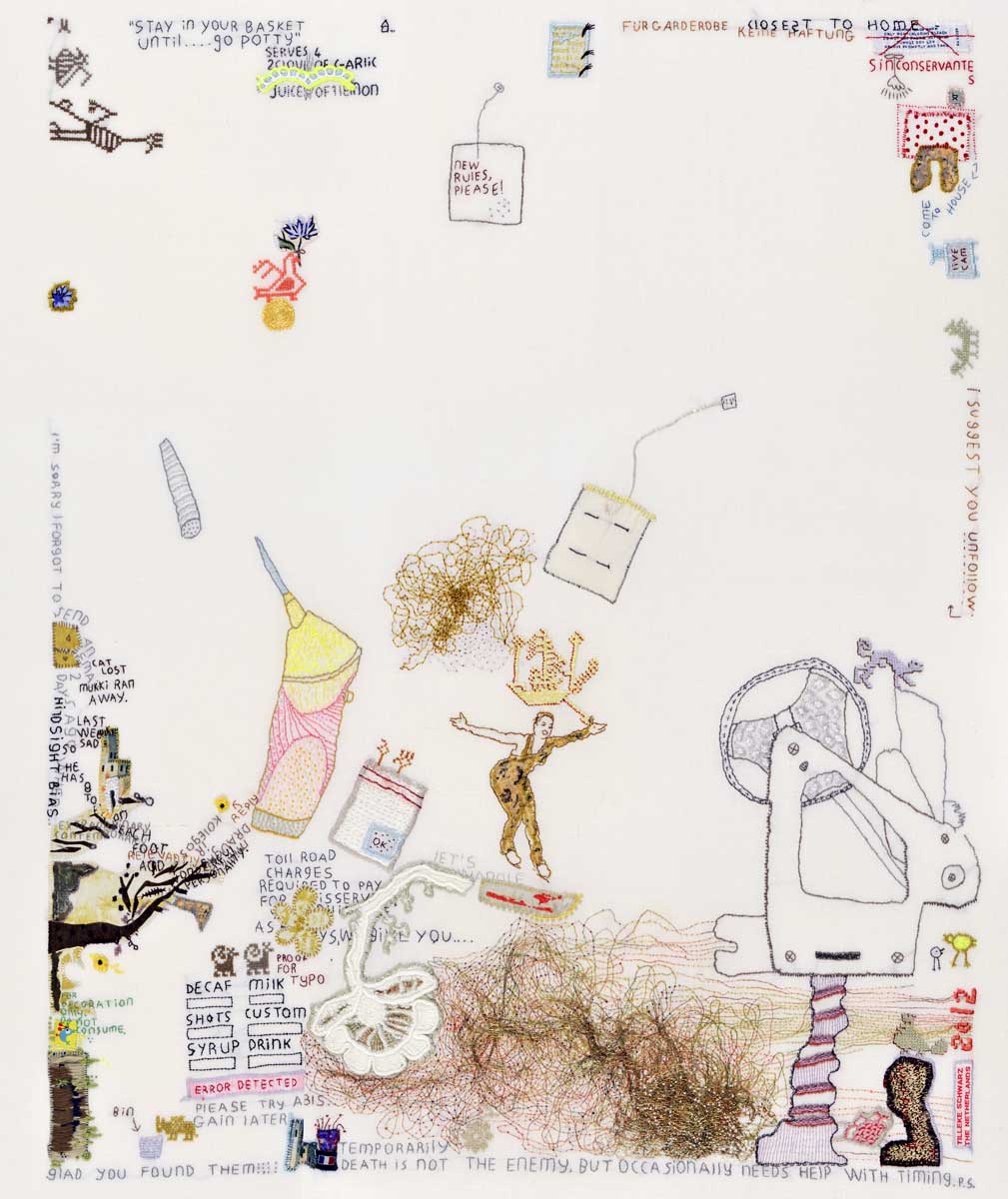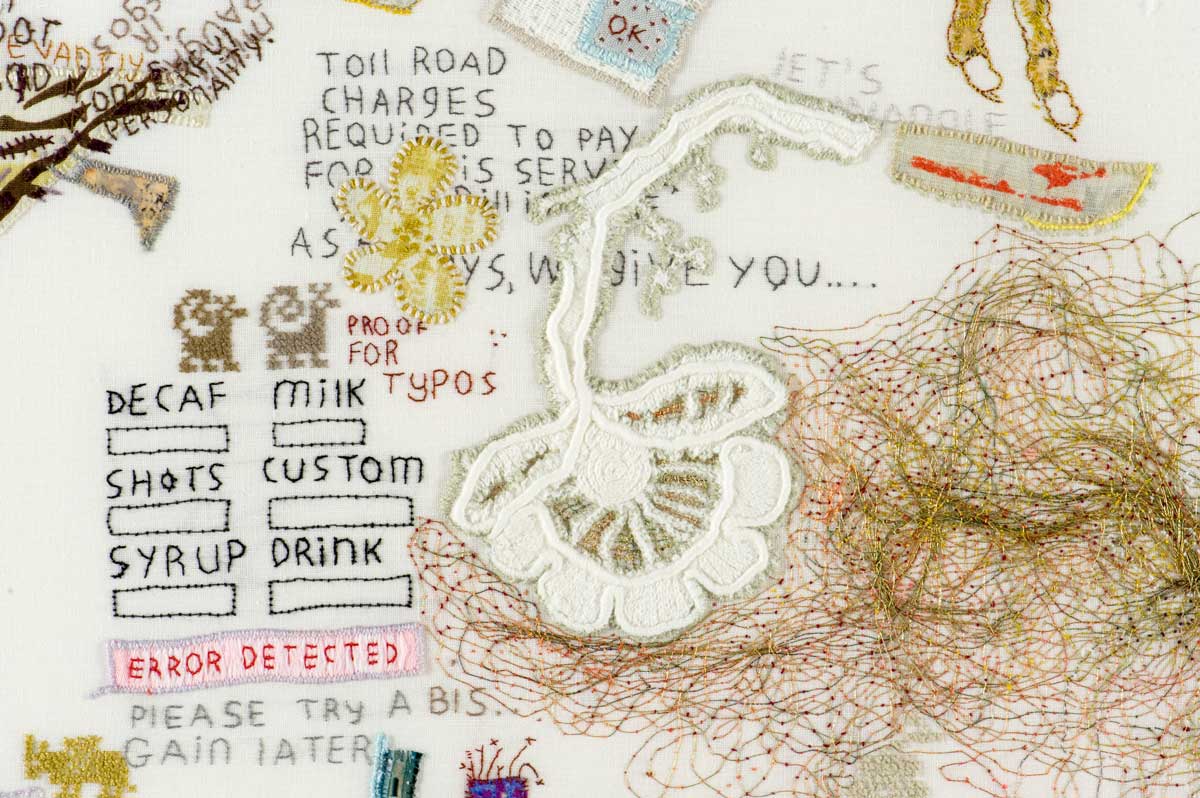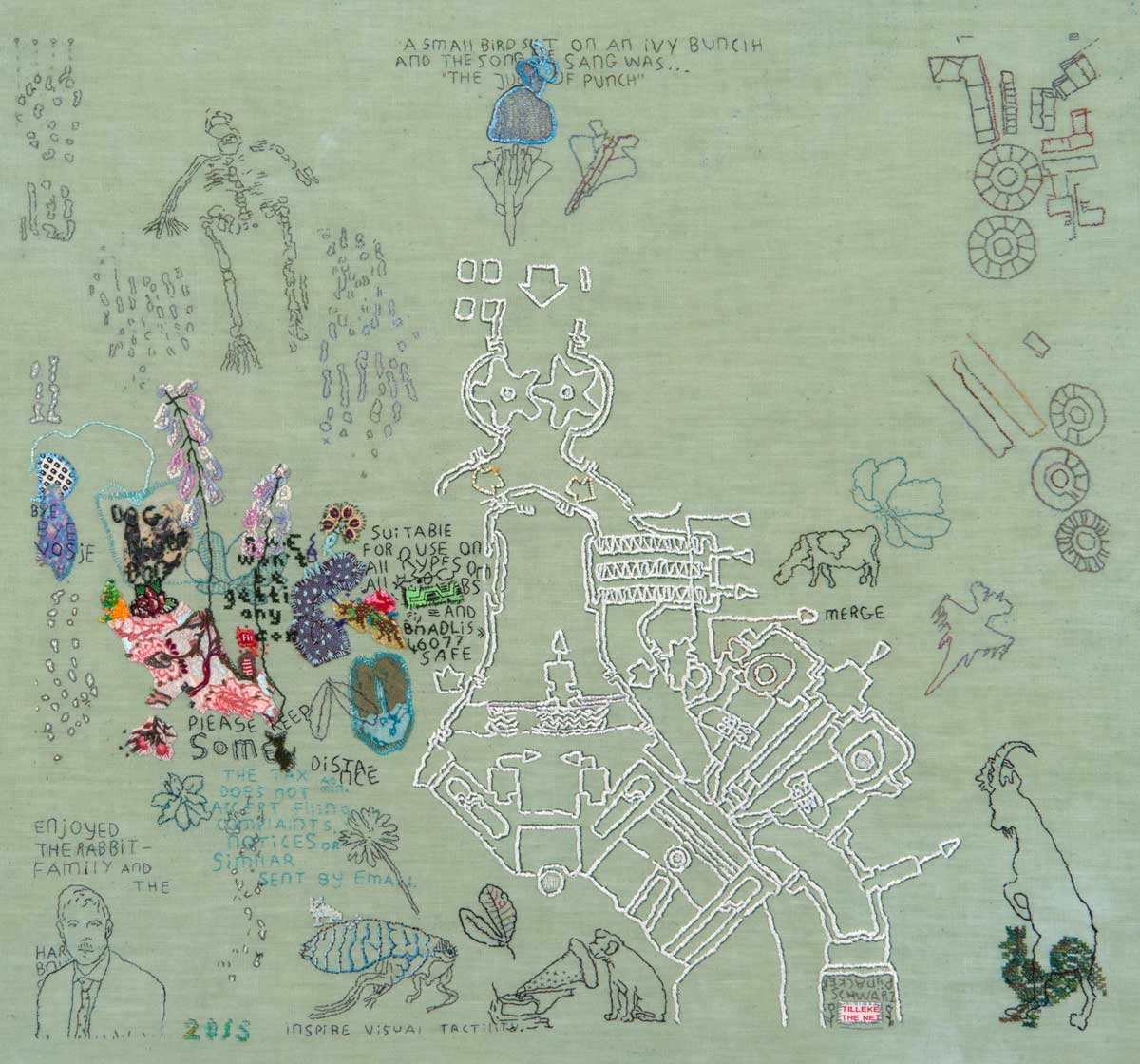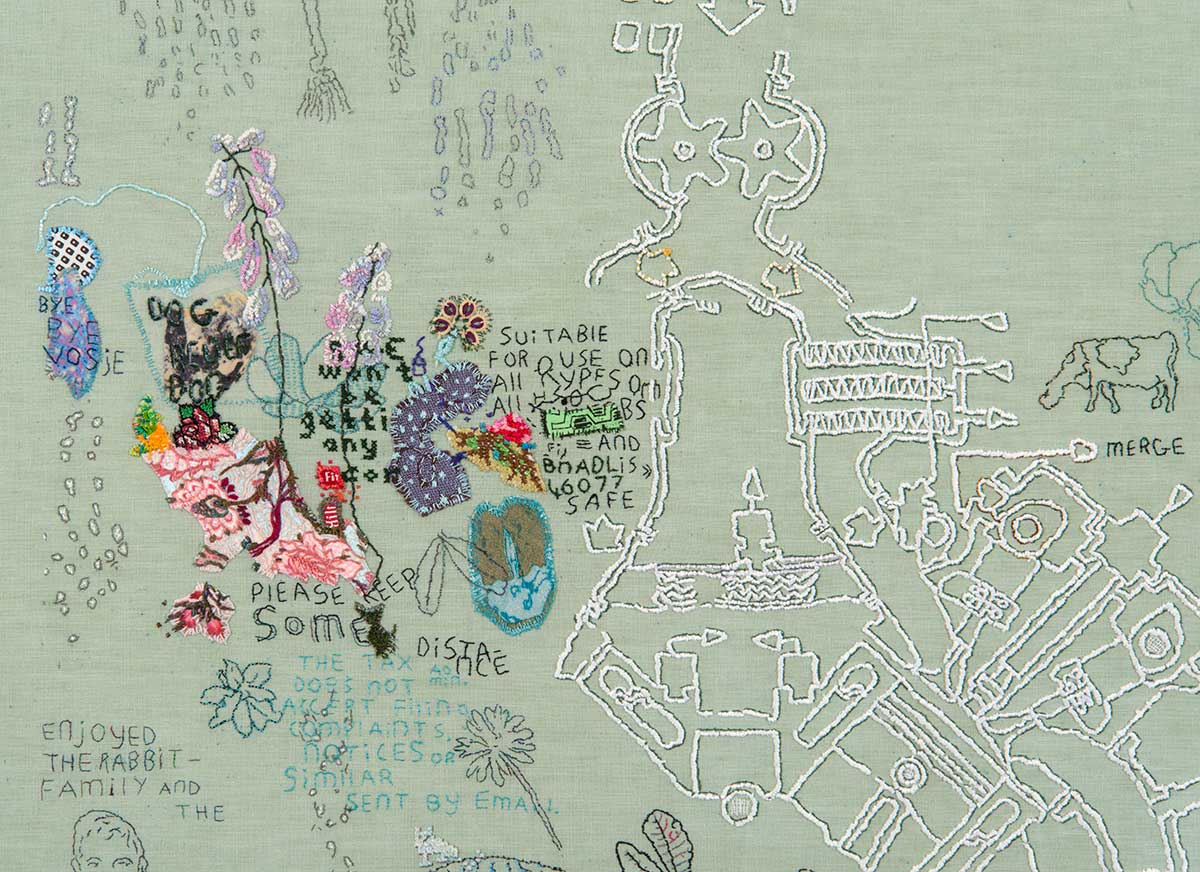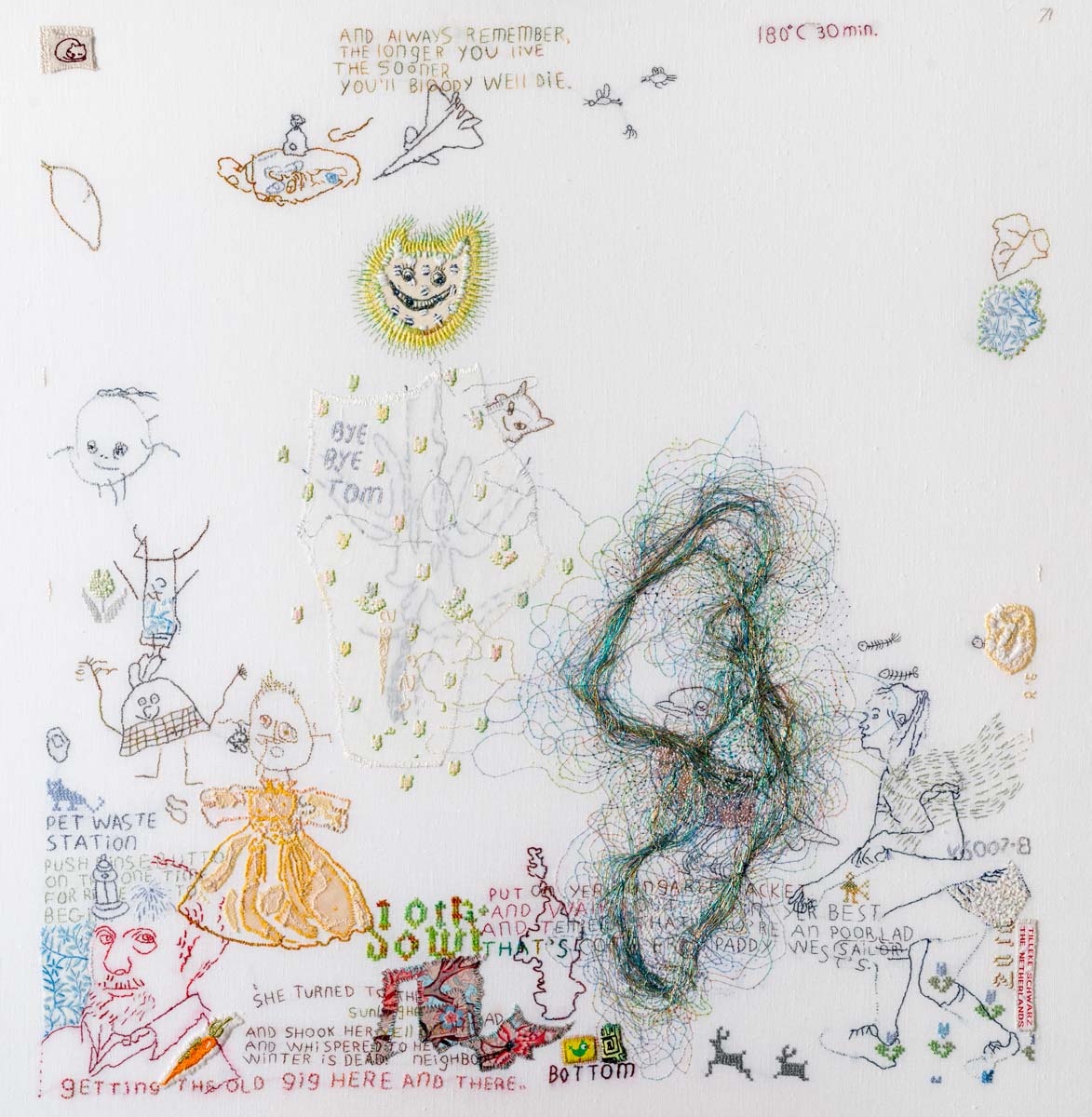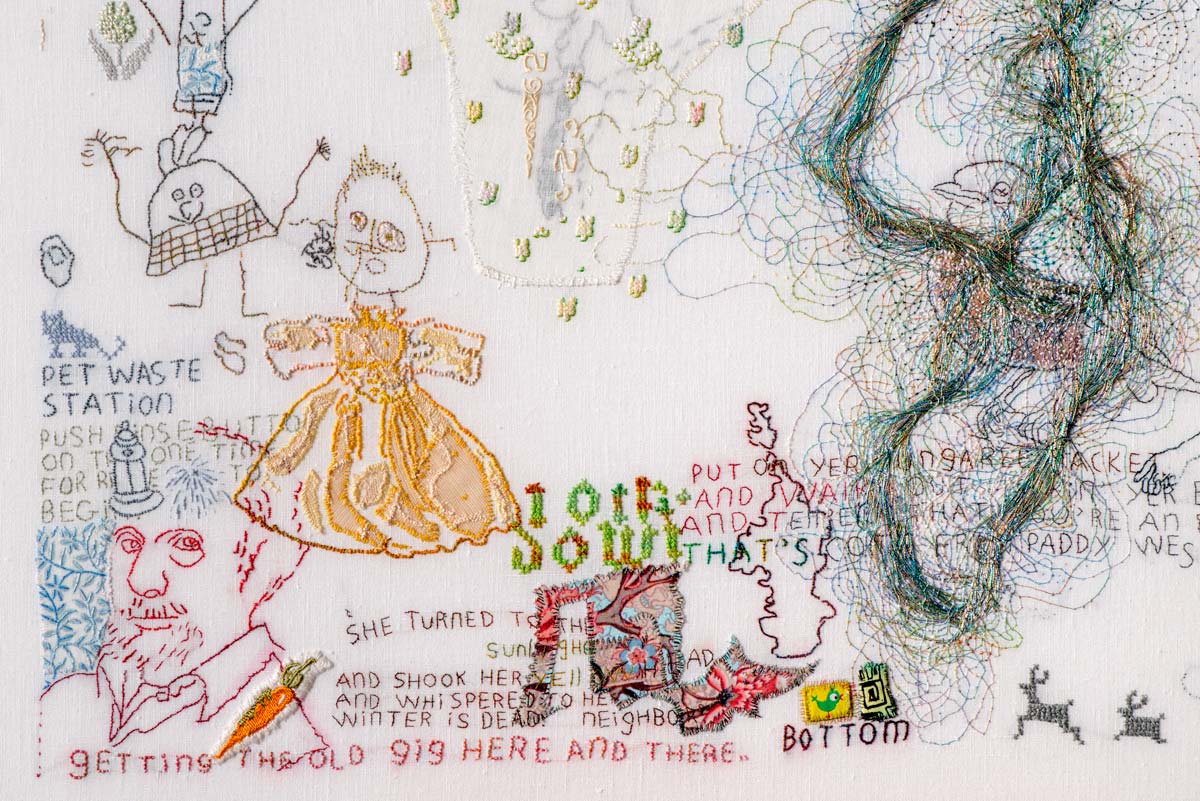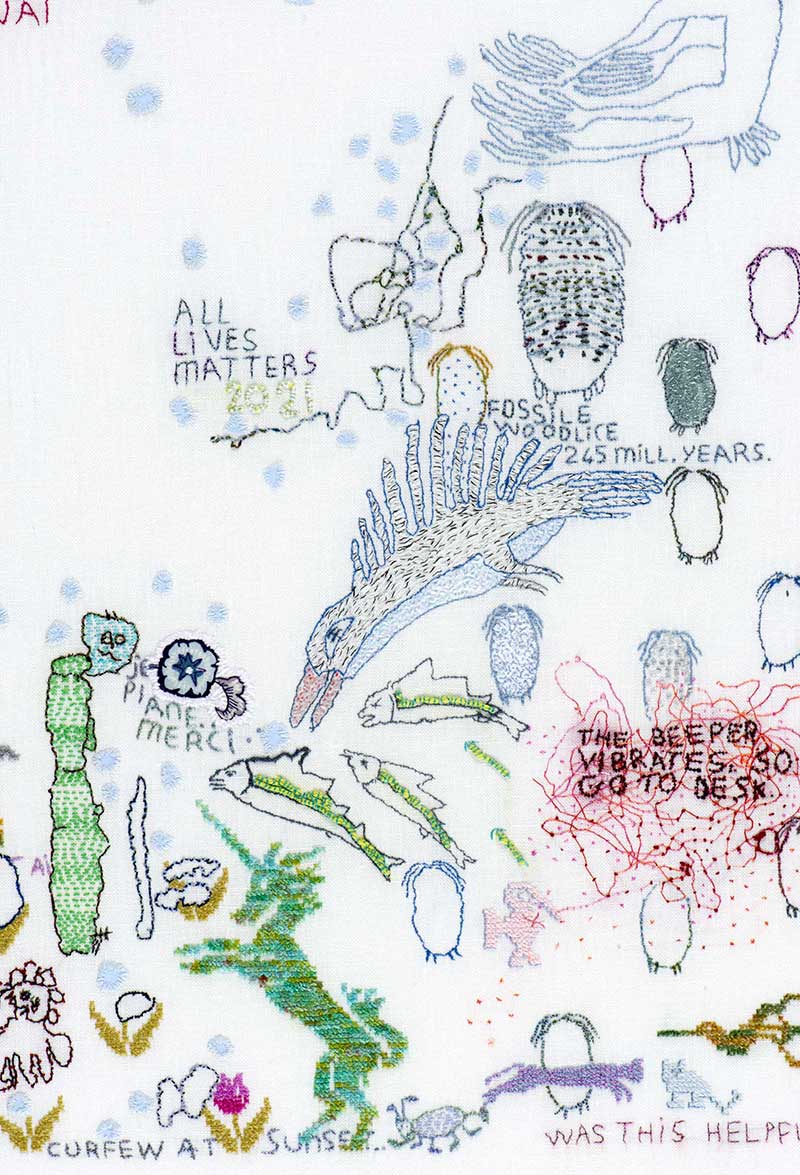
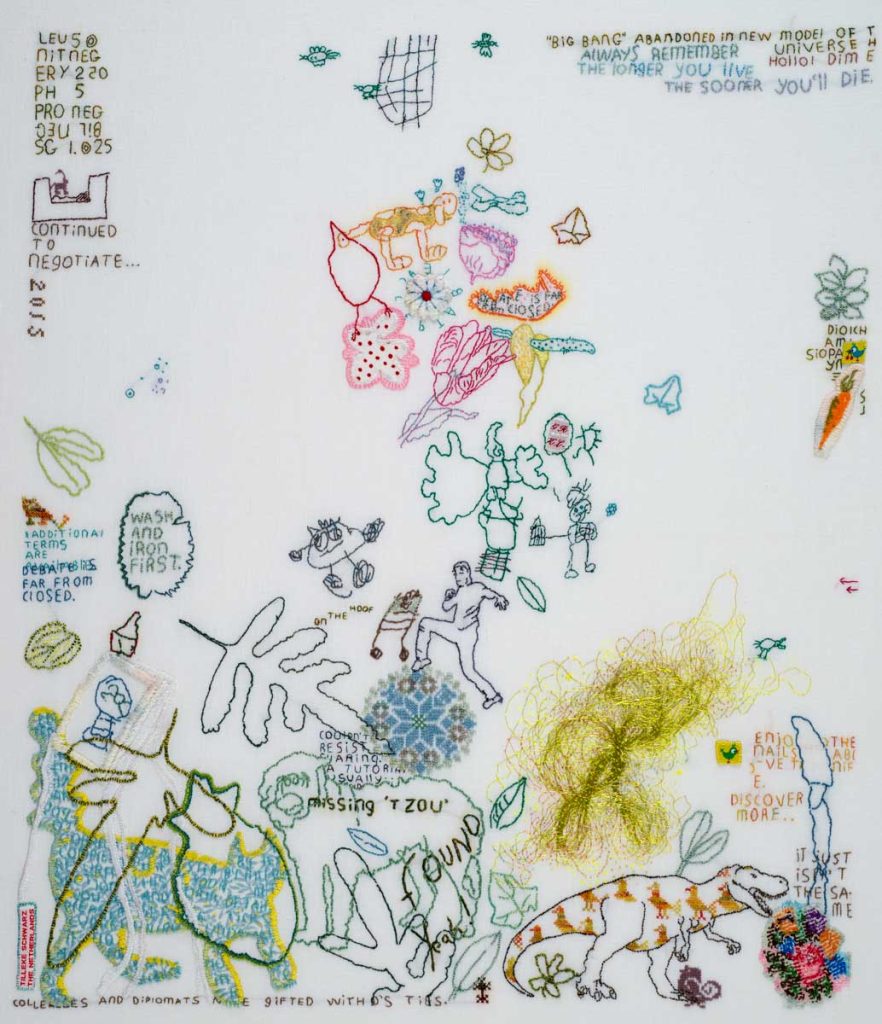
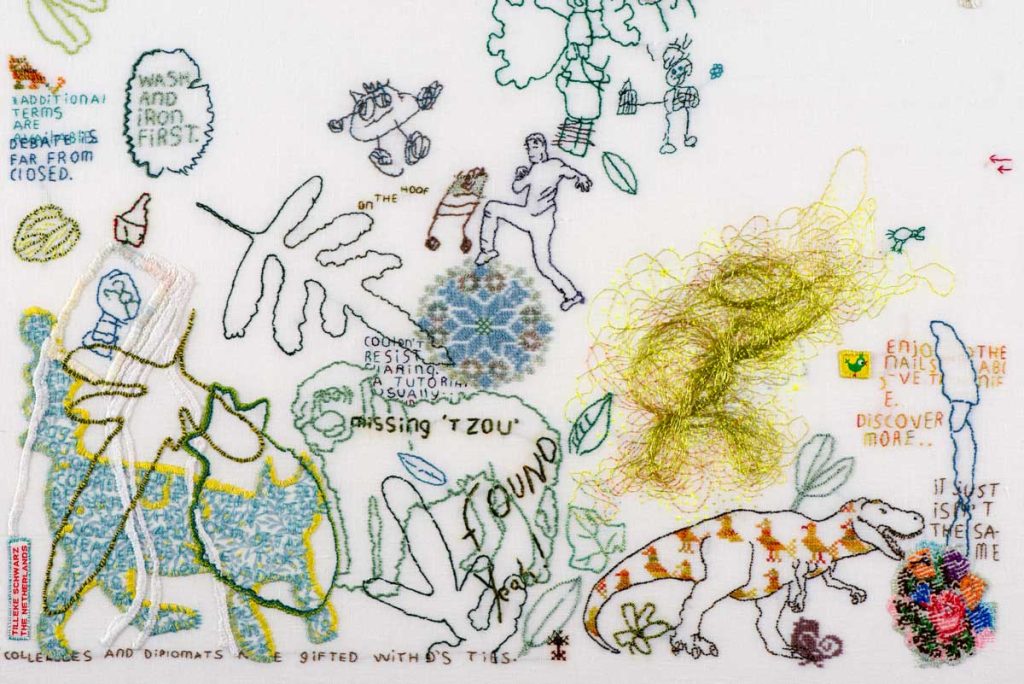
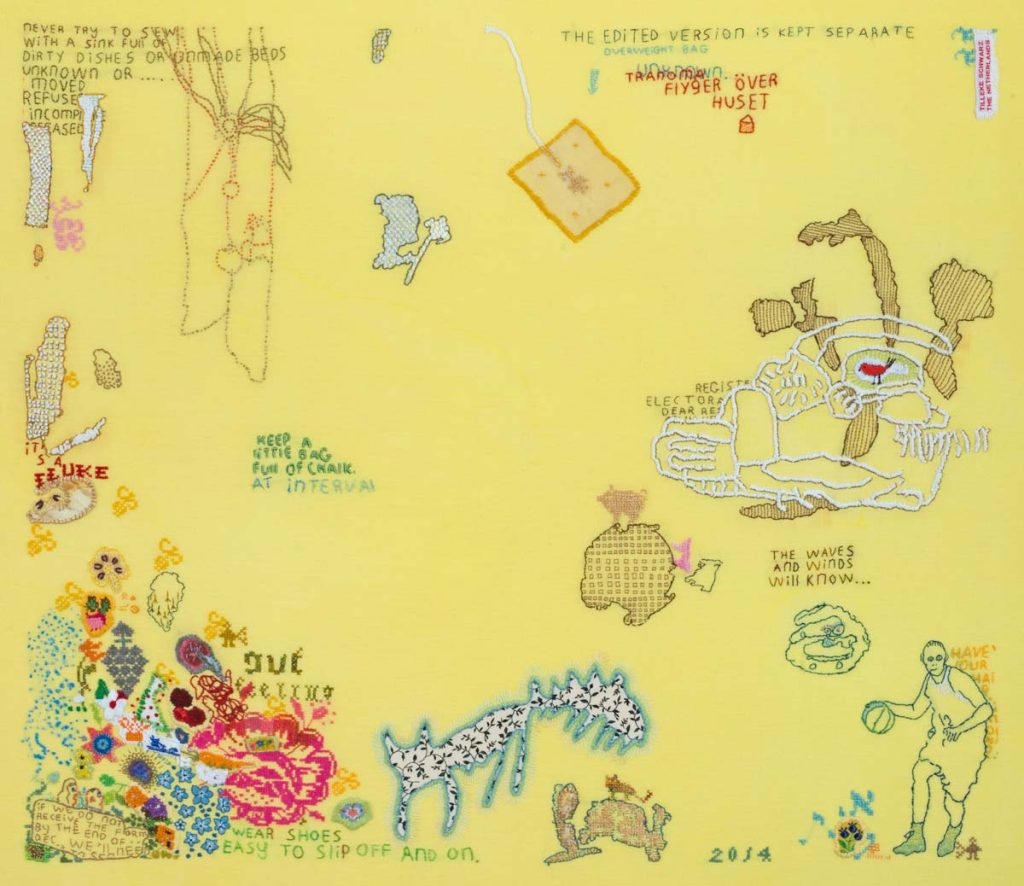
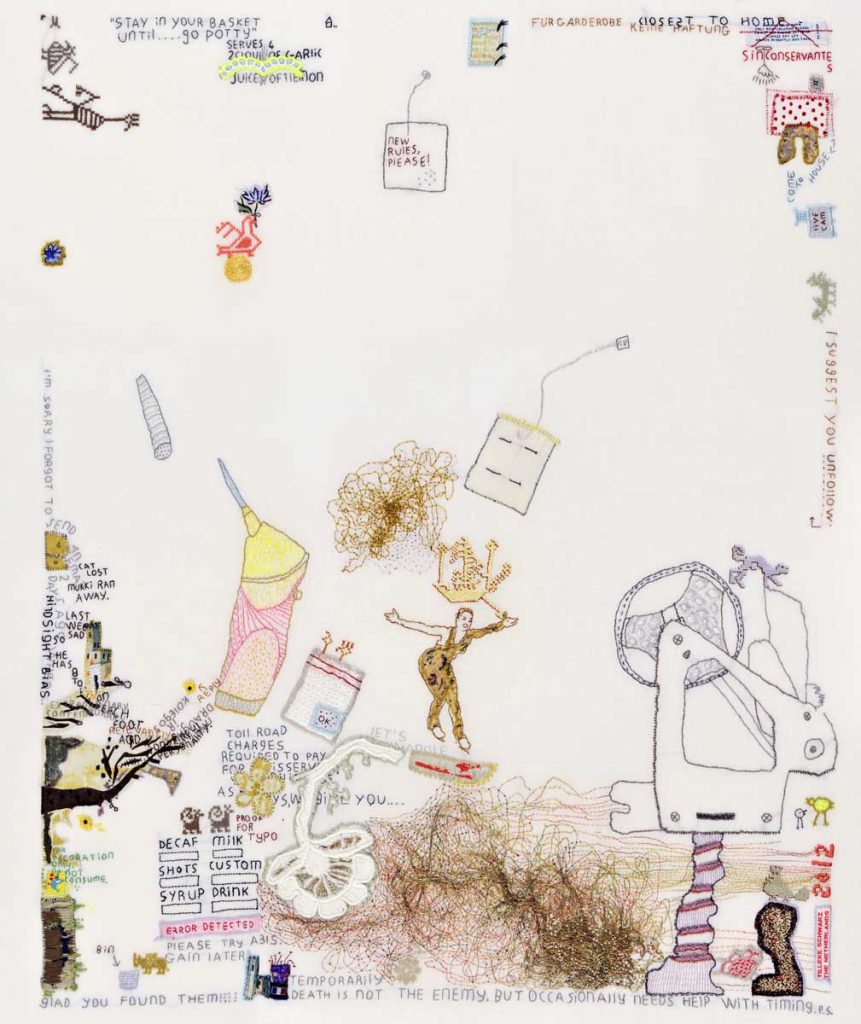
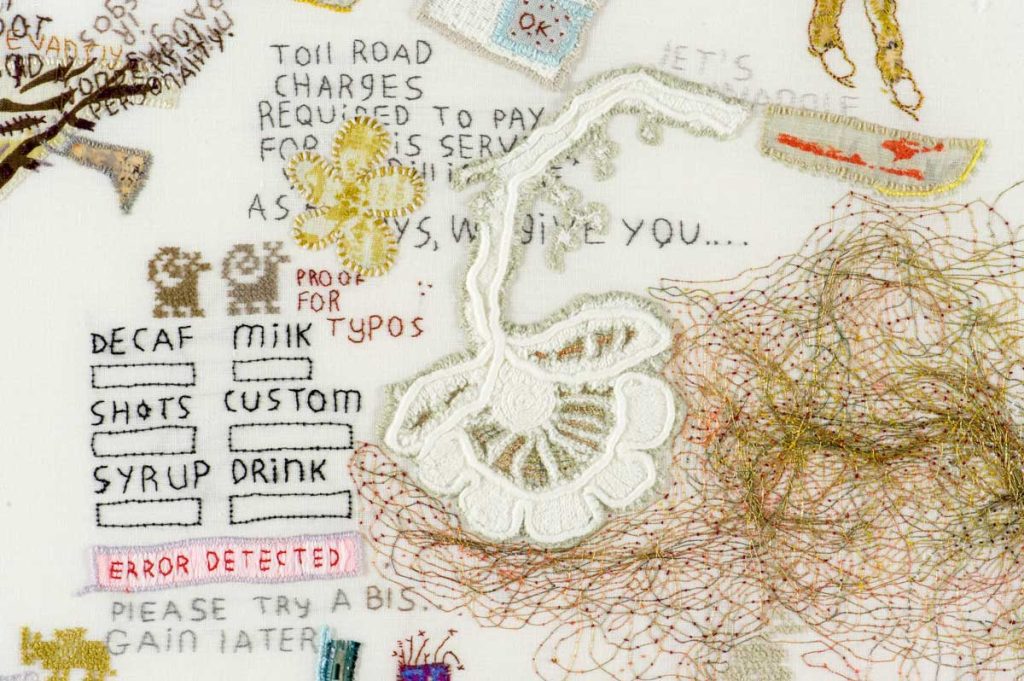
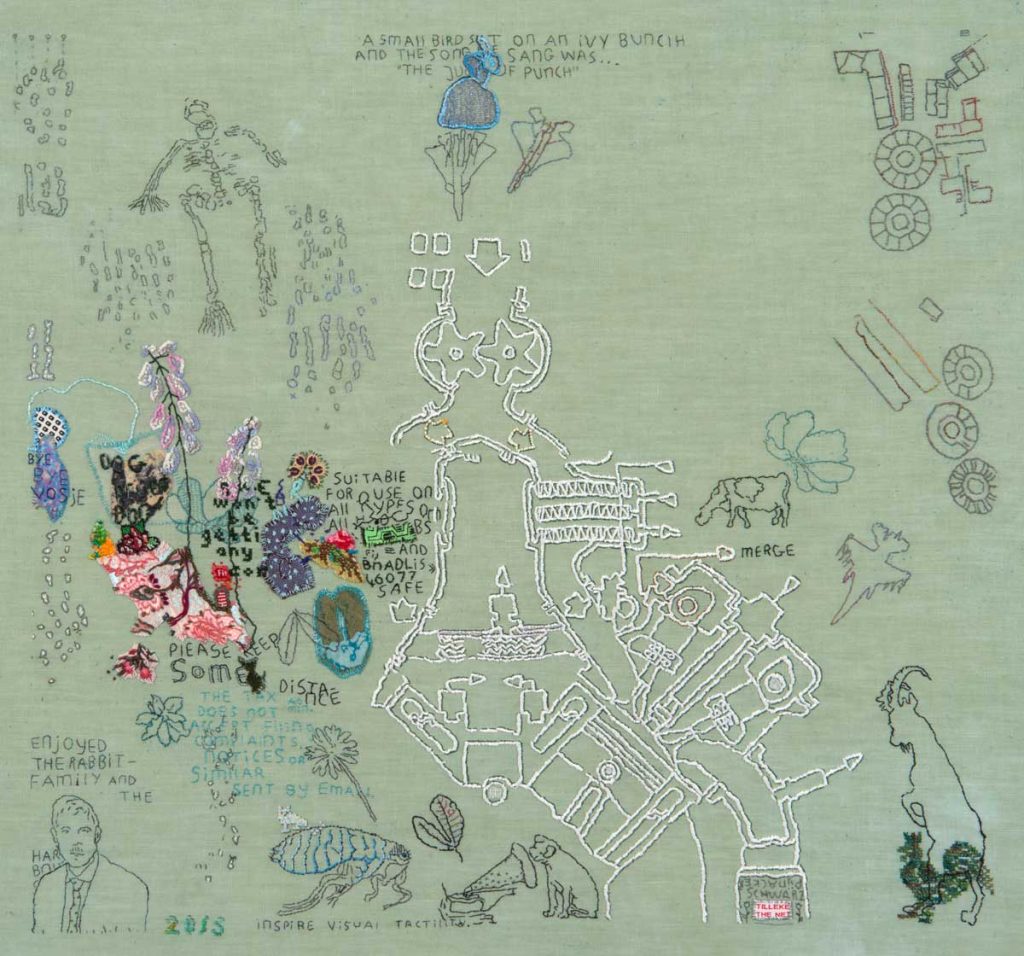
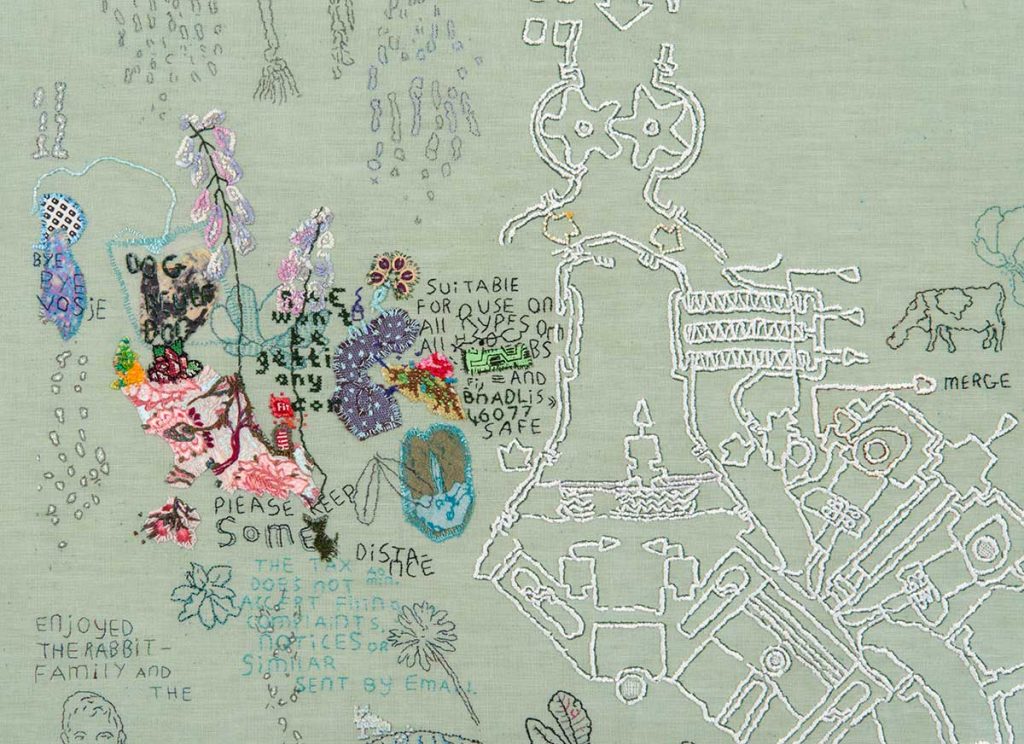
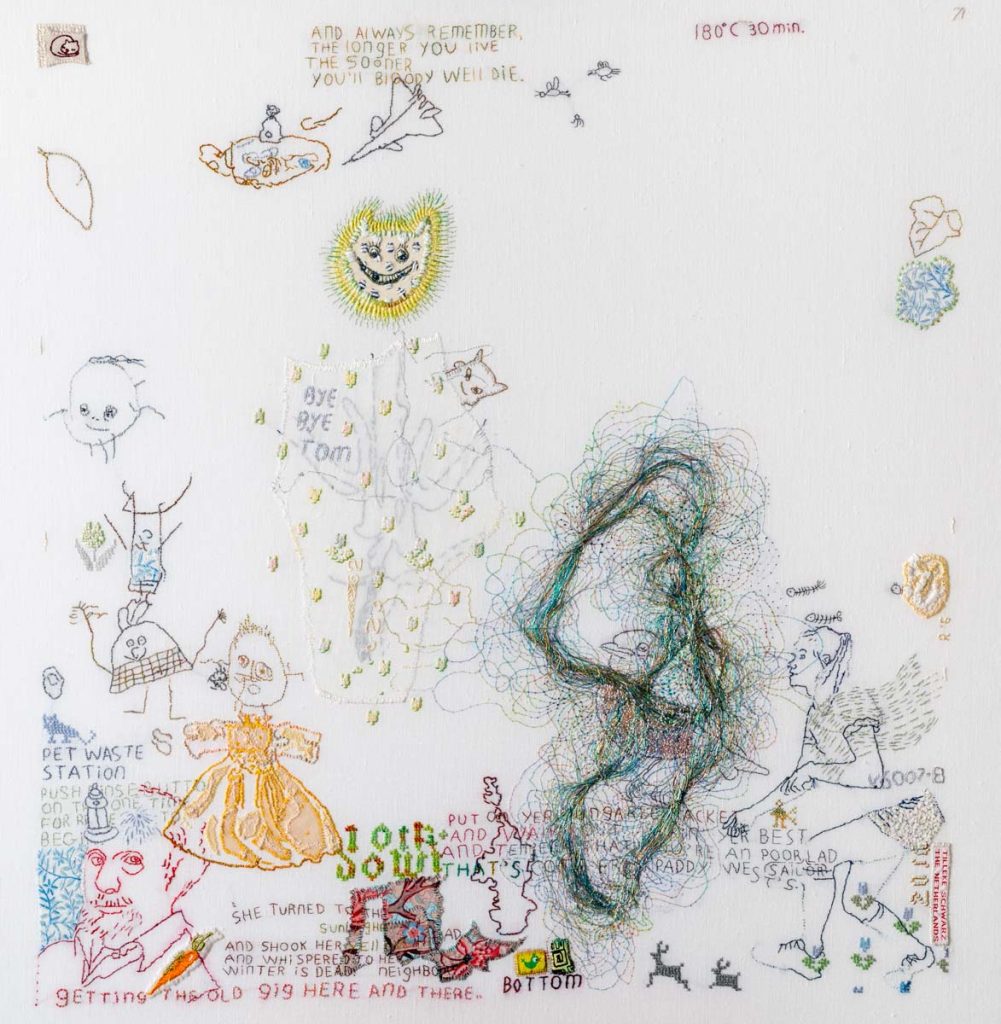
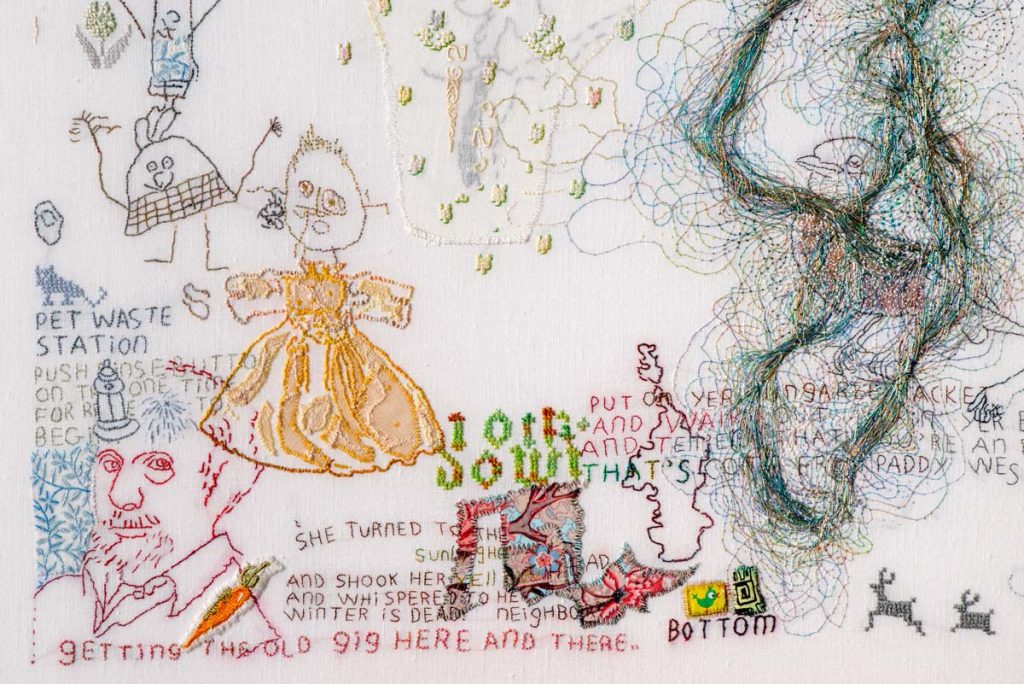
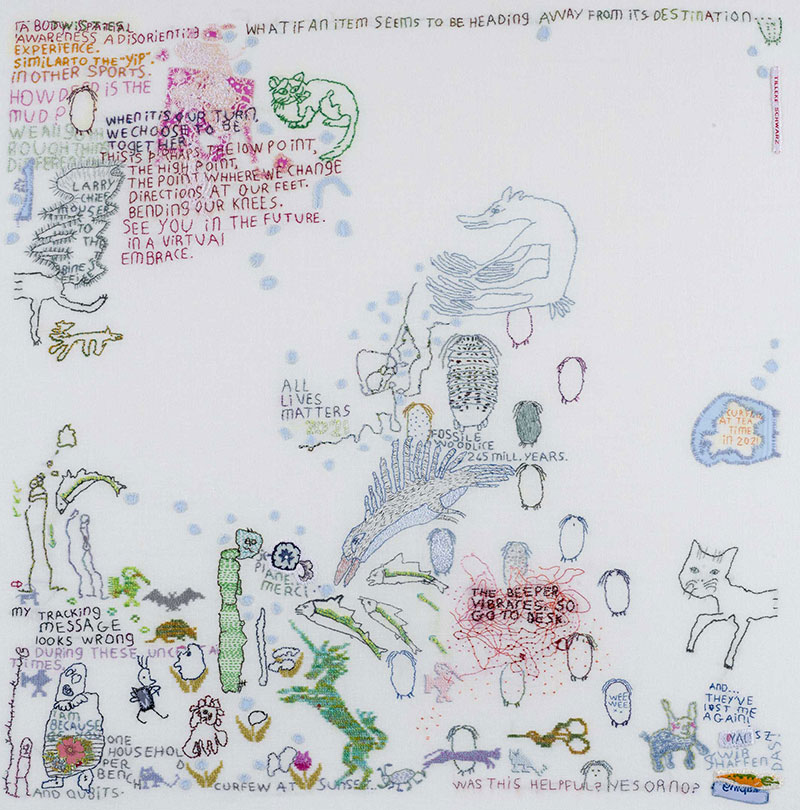
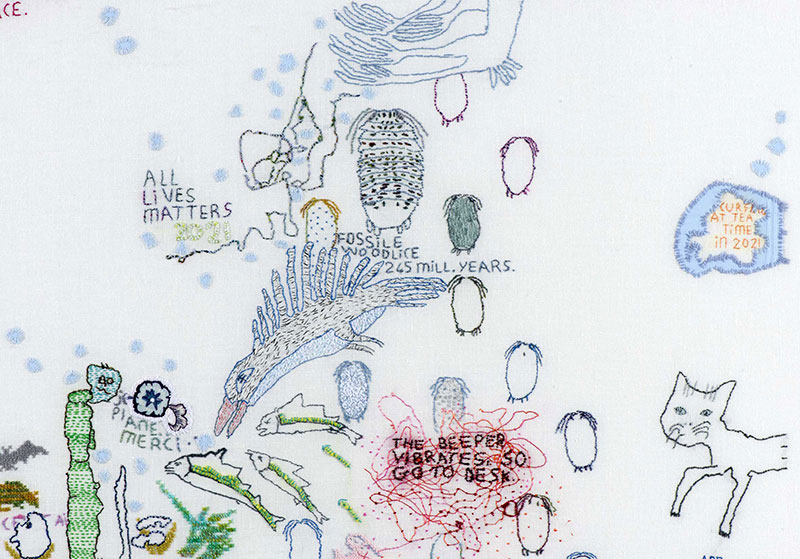
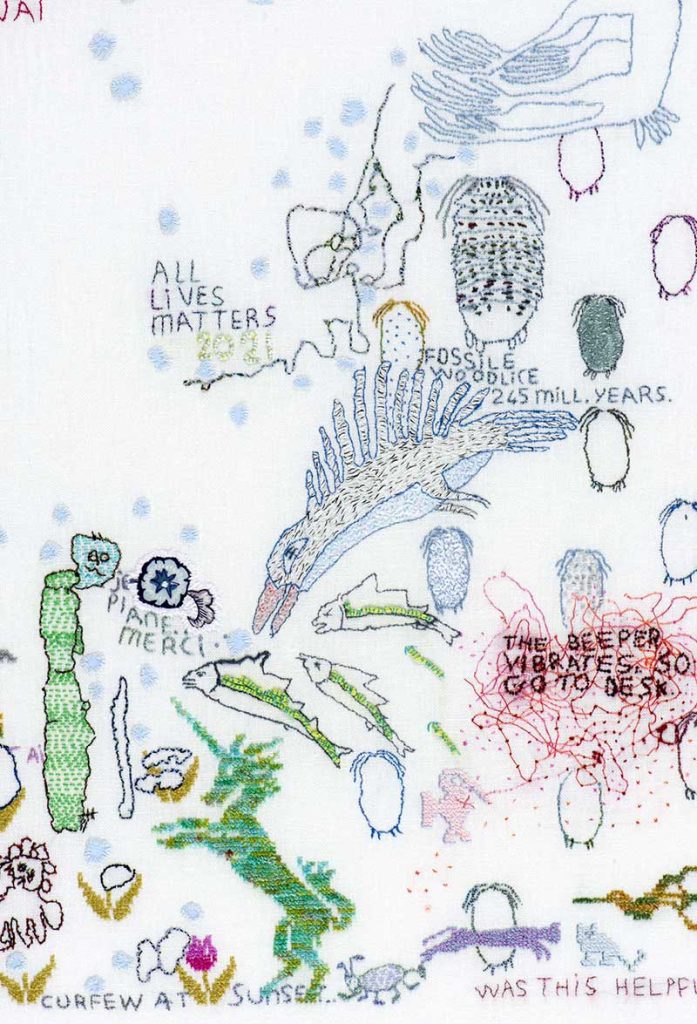
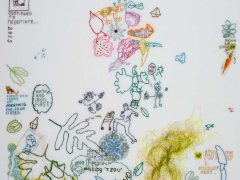
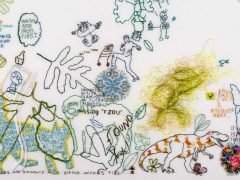
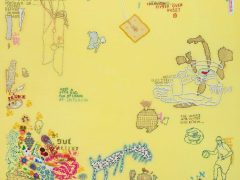
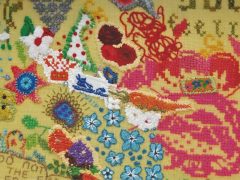
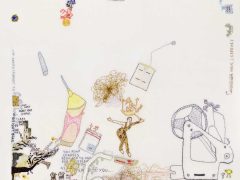
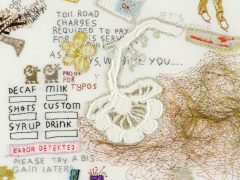
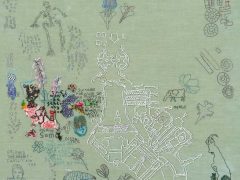
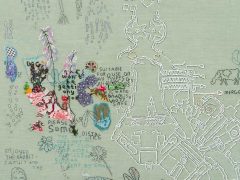
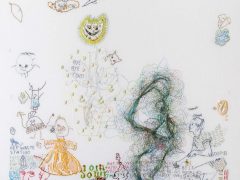
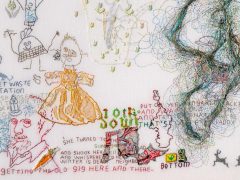
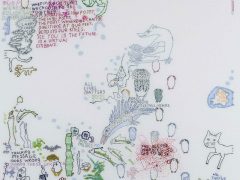
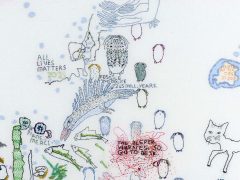
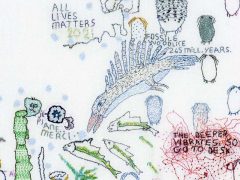
Tilleke (1946) stitches maps of modern life that are reminiscent of graffiti. She includes anything that moves, amazes, or intrigues her. Daily life, mass media, traditional samplers, cats, and other (prehistoric) animals are major sources of inspiration. The result is a mixture of content, graphic quality, and playful experimentation. All of her work contributes to one overarching concept: the oddities of modern life. Sometimes her work is considered a contemporary sampler.
Looking at her work from a different angle, it can be understood as a kind of visual poetry. All of her work contains narrative elements—though not complete stories with a clear beginning, storyline, and end. On the contrary, these narrative structures function as a way of communicating with the viewer. The viewer may assemble the stories and create chronological and causal connections. In this way, the viewer might step into the role of the “author.” It becomes a kind of play between the viewer and Tilleke.
Tilleke’s work relates to the history of humanity, which is shaped through stories. Her sense of humour reflects her Jewish background: a mixture of laughter and tears. Tilleke loves textiles because of their tactile qualities. Textiles generally create a more intimate relationship with the viewer and are very suitable for communicating emotions.
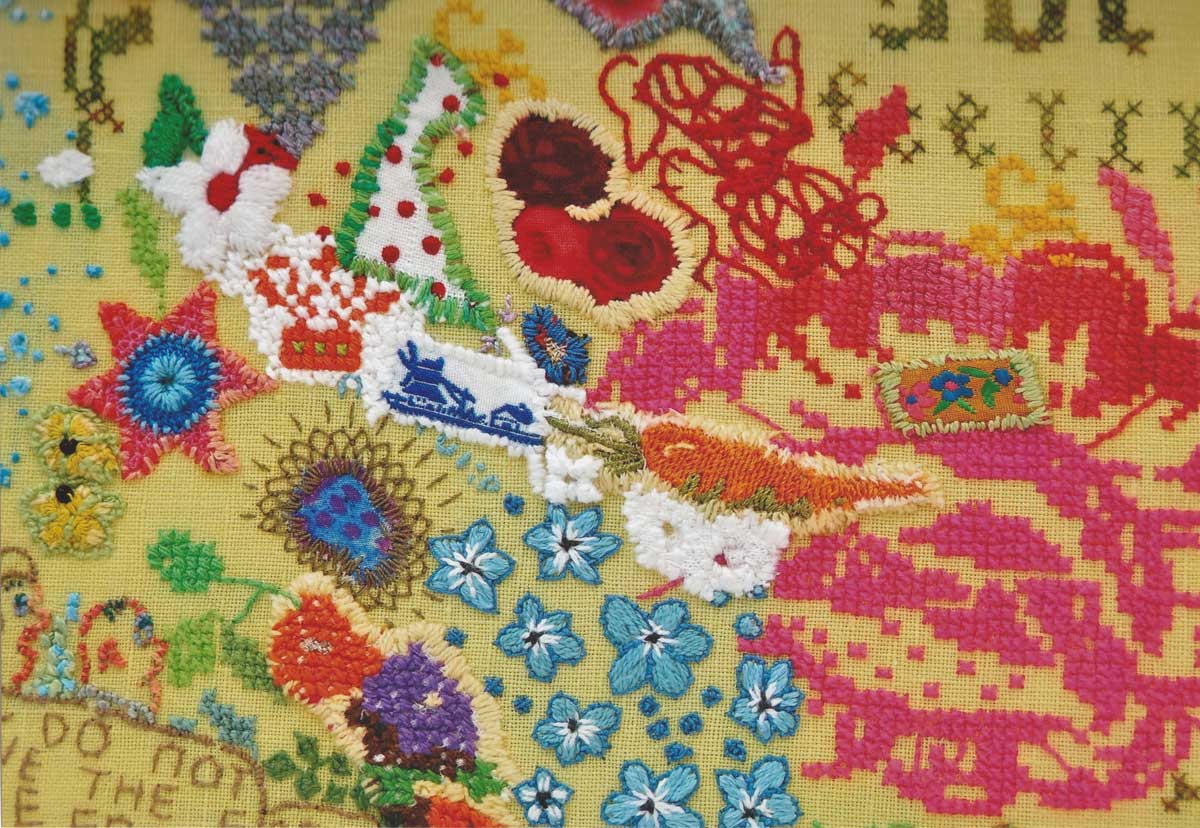
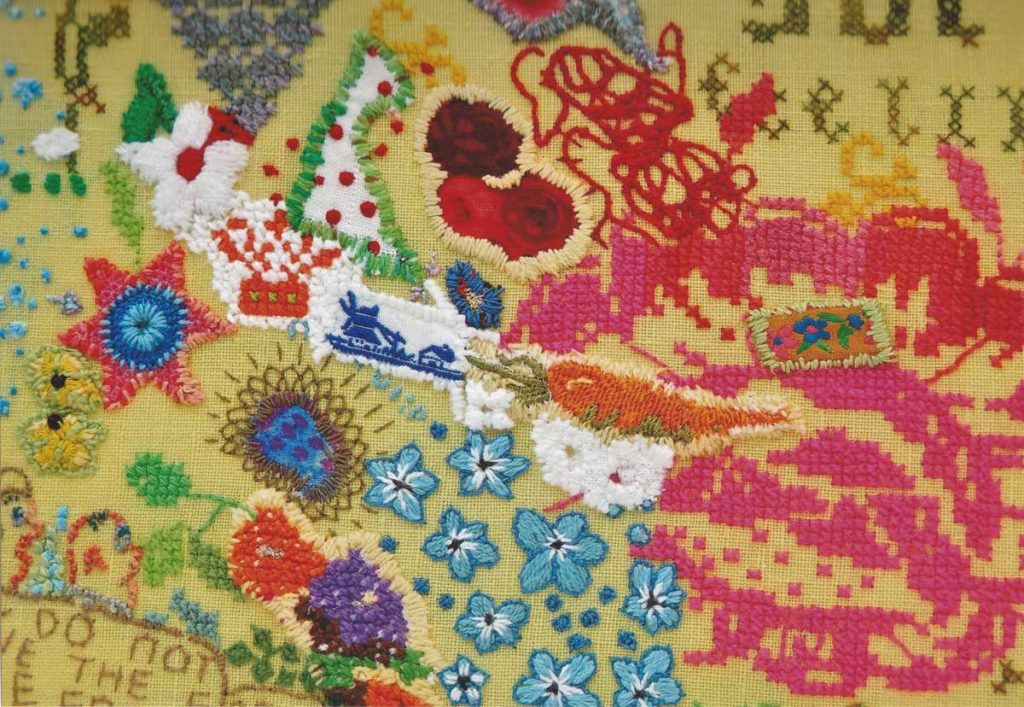
All of her textile work has been hand-embroidered on fine white linen (50 count). Part of the linen has been dyed. Her stitching may look intricate and complicated, but she actually uses only a few different stitches and manages to make the most of them—perhaps even inventing new ones. She often includes tiny pieces of cloth in her work. Tilleke loves colour and has an impressive collection of at least 3,000 different embroidery threads to choose from.
In addition to embroidery, she has also created works in mixed media on paper. Tilleke used to enjoy teaching workshops and is well known for her humorous lectures. Her work is often used in textile training, and students are frequently inspired by the freedom in her work.